
Given the rise in popularity of journey mapping and the many uses modern marketing has for the discipline, brave executives standing at the beginning of a customer journey mapping exercise will understandably have a few questions. We’ve highlighted below a few tips that will hopefully come in handy as they confront several key decisions.
1. Decide on the time frame
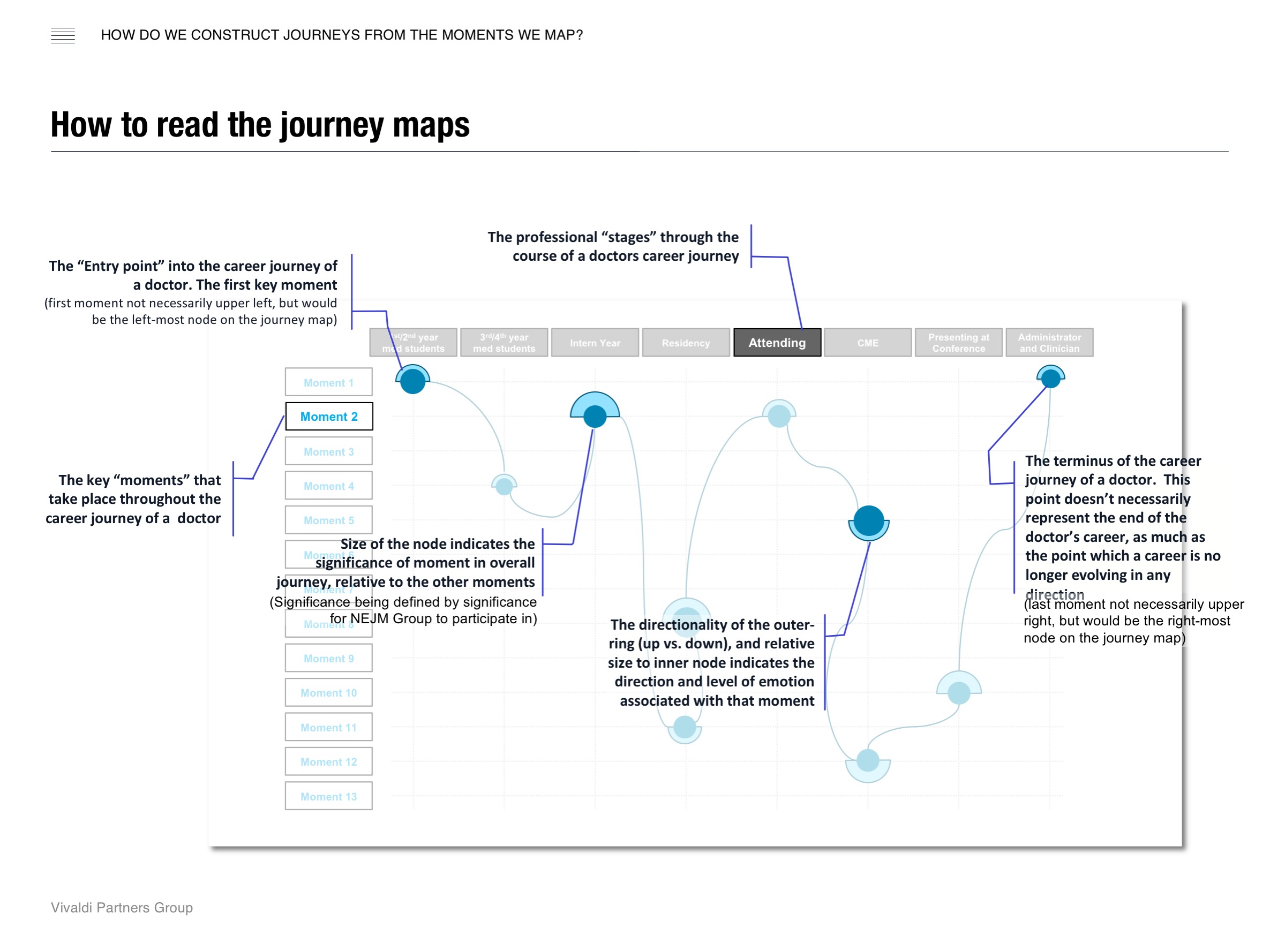
One of the first decisions is choosing the right time frame – customer experience during one interaction with the brand? Across the purchase cycle? For a day in the life of a customer, a week, a month, a year? Or through an entire lifetime? This will be a key decision driving the level of granularity of the project, as well as the types of insights generated. It will largely depend on the goals as well as the industry. If the goal is to optimize UX on a website or digital experience on an app, the time frame may be one interaction but will involve a lot of details (the mechanics of the search process, interaction with various features of the app/website, length of the purchase process). For brands and companies looking to build customer relationships and taking a broader view across the portfolio, a more longitudinal approach may be more helpful. For a customer journey mapping in the medical sphere, it became clear quickly that a day, a week or even a year would not yield sufficient insights, as doctors tended to have a very different relationship with the brand as medical students, than as young doctors, than as mature and established physicians, possibly aspiring to role in teaching or administration. Since the goal of the brand was to build a lifetime relationship with physicians, framing the customer journey through a lifetime allowed to understand how needs and pain points evolved across a physician’s career.
2. Define the right level of detail
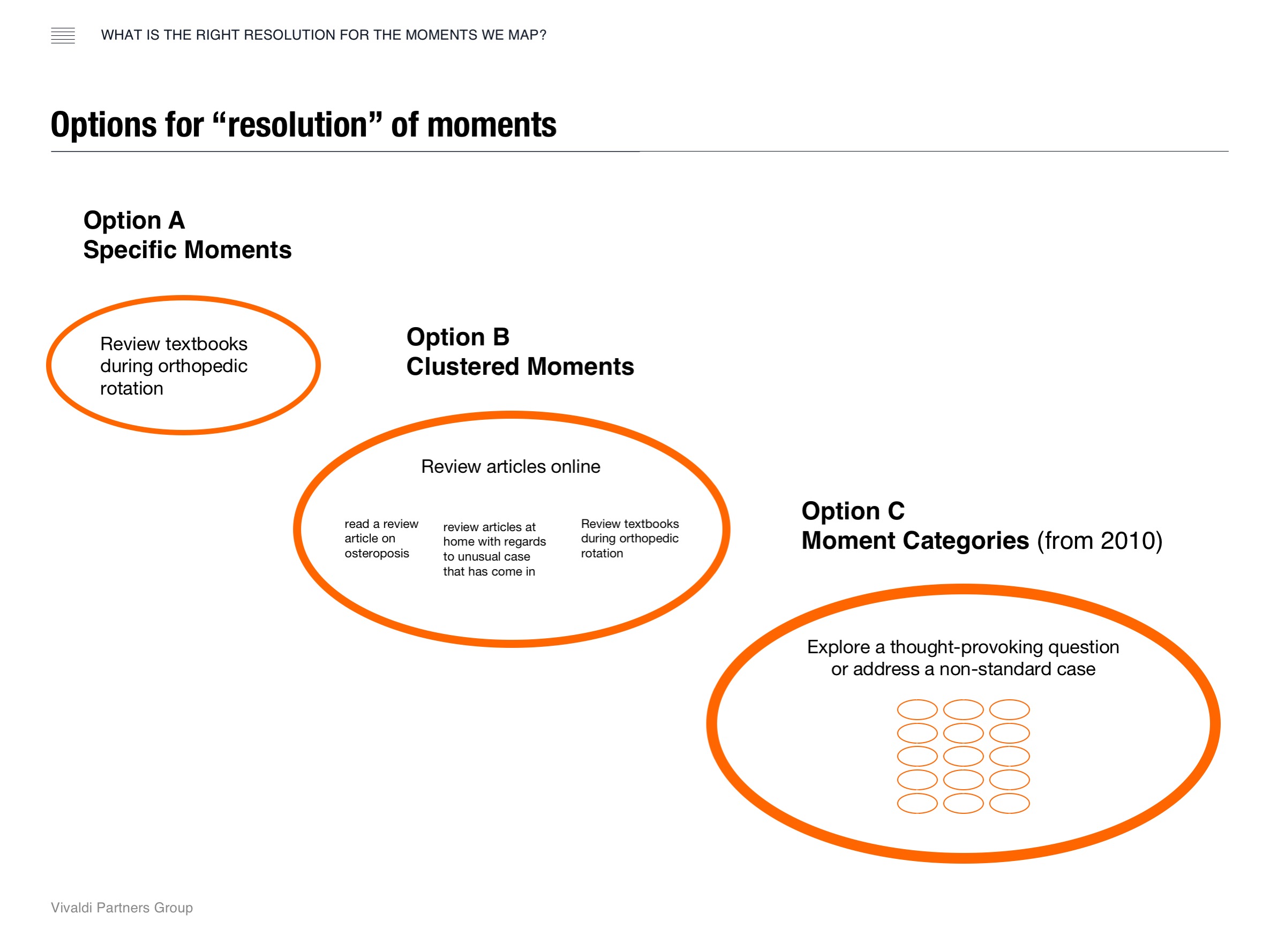
The second important decision is the level of resolution: A customer journey map can be extremely detailed (which often goes together with a shorter time frame), laying out every aspect of an information search or a purchase decision, or offer a bird’s eye view. Again, goals and industry dictate the outcome of this decision: while doing journey mapping for a large European utility, it became clear that more data on each moment would not lead to better decision-making. Instead, the decision was taken to focus not on each of a myriad of moments along the journey, but on “Moments of Truth” – Moments of key interactions with the brand, that often brought with them a change in perception and relationship. Focusing on these key moments allowed to make the journey insights more actionable, as these moments were a key opportunity to make a difference for the customer. Another client was choosing between individual moments that would present a host of data on a granular level, clusters of moments( or “meta-moments”) where similar moments were put and analyzed together, and “categories of moments” that would focus on main activities with no sub-division. Ultimately, “categories of moments” were too high level to provide the right depth of insight; individual moments were too disparate and too numerous to create a full picture. Clusters of moments provided the right level of detail to capture all the richness of real-life experience, without losing the forest behind the trees.
3. Capture the right information.
Too many journey maps end up too descriptive and not analytical enough – they do a good job of helping the organization get into the customers’ shoes, but fail to deliver actionable outcomes. The reason is that they focus too much on descriptive detail and not enough on what is missing – pain points, frustrations, unmet needs that present an opportunity. This is one of the key benefits of customer journey mapping, often lost behind the description of the moment. That is why journey mapping is a 2-step process: first, as an anthropologist, it helps to get fully immersed in the word of customers, without any lens or bias. A separate step in the process is then mapping future or “ideal” customer journey, looking at the same situations with the lens of “What could be?”. This step presents a set of interesting dilemmas in framing ambitions: How far-reaching should be the ”ideal” customer journey? Should it be a best-case scenario or a compromise, based on feasibility and constraints? Depending on the level of organizational ambition (Is your organization shooting to be best in class? Break new grounds? Or is the goal to get customer experience on par with competition and existing expectations? ) as well as resources available, many organizations choose a scenario model. First, an “ideal” journey or Best-case scenario is mapped; second, the best-in class model is taken down to what can be realistically achieved within the set time frame (e.g. 3-5 years). The Scenario approach typically yields the best ideas, and even the “moderate scenario” offers more innovative solutions that expected – as always, once the goals are clear, it is always possible to figure out how to get there. Organizations under significant resource constraint or time pressure, or looking to meet rather than exceed existing industry standards, may choose to forgo the Scenario approach and short-cut directly to a more realistic, highly feasible journey.
4. Visualize the journey
From the self-reliant “lonely cowboy” to the bumblebee, the real-life customer journey has changed so much that it could only bring fundamental change to the skill of customer journey mapping itself. In this evolving field, we are grateful to our clients at Vivaldi who engaged on this journey with us. While reaching the destination was key, many discoveries were made along the way that we hope will be useful for the years to come. We look forward to the next steps in our journey.