
The customer journey map displayed in your conference room is a relic. It presents a clean, linear path from awareness to purchase—a comforting fiction in a world that has become anything but linear. Today’s consumers don’t follow a map; they swarm. They move in a chaotic, erratic pattern, jumping between social feeds, search results, and physical stores with no predictable logic. The traditional funnel is gone. In its place is a dynamic cloud of activity. Winning no longer means guiding a customer down a pre-defined path. It means understanding the intent behind every single interaction within that cloud—each search, click, and share that constitutes a micro customer journey—and building a brand that thrives in the messiness.
Engaging in customer journey mapping is a journey unto itself—one that Vivaldi’s Anne Olderog will take you on with this 3-part series. Over the course of the series on customer journey mapping, we will take you through the rise and transformation of this growth-strategy tool. Below find part one of the series, which shares how the discipline, after gaining considerable popularity, has recently undergone an evolution. A RISE IN POPULARITY In a world of empowered consumers, brands have become hungry for a deeper understanding of what drives demand. The transactional view of customers, explained by the traditional brand funnel and where all efforts were focused on closure, has given way to a more relational model, where the focus is cultivating customer relationships, not just one-off transactions. Measuring transactions was a way to win a battle at the risk of losing the war, if customers caught buyer’s remorse or posted negative customer feedback on social forums. Relationships, on the contrary, are a long-range game, where every round has to not only be won but also needs to prepare for the next one. While in B2B there had been an understanding of relational sales for some time, the concept has increasingly caught on in B2C. Digital disruption has brought about a focus on eyeballs and customer footprint, with monetization to follow; reversing these priorities means running the risk of undercutting growth. Beyond hunger for customer understanding, two key factors in the rising importance of customer journey mapping today are dynamic micro-targeting, and the emergence of platforms. While the traditional purchase funnel was decent at converting customer segments, micro-targeting requires a more granular understanding of customer decision dynamics. Marketing decisions today are increasingly dynamic, thanks to marketing software tools and micro-segmentation techniques. Dynamic marketing decision-making requires decisions to be made on the spot, in an answer to hundreds of small steps, as opposed to ex-ante, with 5 funnel stages guiding the response. Finally, our platform world has made it vital to take into account intersecting customer journeys, as consumers and customers increasingly rely on crowdsourcing, making decisions based on feed-back, and publicizing their own opinions. Customer journey mapping in the age of platforms is a special beast, as understanding influences and incision points between various groups becomes critical to success. One can say that the era of individual journey mapping is over – today it is time for intertwined customer journeys reflecting the ecosystem at large. ADAPTING TO CHANGING TIMES With the discipline’s popularity explained by the increasing sophistication of marketing, it would be a crime to conduct journey mapping today the way it was done 10 years ago. And indeed, the principles have evolved to stay relevant. 1. The linear journey map is dead – welcome to the bumblebee. In fact, just as the traditional brand funnel is dead, so is the linear journey map. Journey maps used to exhibit a surprising amount of structure, with each step leading neatly to the next one, and culminating in a purchase. While taking on a customer view of the world, it also makes sense to accept the messiness of real-life journeys: in today’s digitally disrupted world, customers (and consumers) will jump from one inception point to the other, with logic to be revealed only by careful analysis. In cases of strong brand affiliation and ambassadorship, consumers passionate about a brand may zoom all the way to purchase, skipping the usual intermediary steps – witness are the much-hyped and long-expected new technology introductions. In other cases, it may seem that the progression from one step to another breaks down – or rather, that consumers go through a series of consecutive loops, progressively getting more information from different sources (social media groups, web references, retail environments). While acquiring a dog, prospective owners will gradually gather and evaluate information on the breed that is their best fit (from a combination of online tools and social media), then evaluate the right sources (the right breeders or rescues). They could be close to the bottom of the funnel in the traditional sense, yet often go back and re-evaluate the breed, etc. This zigzag, erratic journey of a bumblebee consumer (or customer) is grounded in multitasking and jumping between channels/touch-points (which is why the channel-agnostic view is so important), splitting attention between different conversations, and jumping back and forth. 2. Focus on jobs to be done – maximize utility in customer journey mapping While traditional journey maps had a strong bias towards the purchase journey, today’s brands are savvy to understand that a larger role in audience’s lives means a larger share of wallet. Rather than focusing on purchase-related decisions (that will inevitably come out of the analysis), it is more helpful to take an unfiltered customer view – and customers, as Google’s CMO famously said, do not wake up thinking about their browser. By getting a real-life feel of customer’s pain points, struggles and tensions, customer journeys can help outline bigger opportunities for brands and products to solve them. Customer journeys today need to focus on the job to be done to be part of the solution – not the speediest way to purchase. An educational publisher realized that while it was relatively easy to get to subscriptions for its young professionals (a subscription to this prestigious publication was seen as a badge of honor at the start of a career), it was more helpful to focus on relevance and usage – if there was no relevant way to use the publication for early career challenges, readership would stop and subscription would follow. 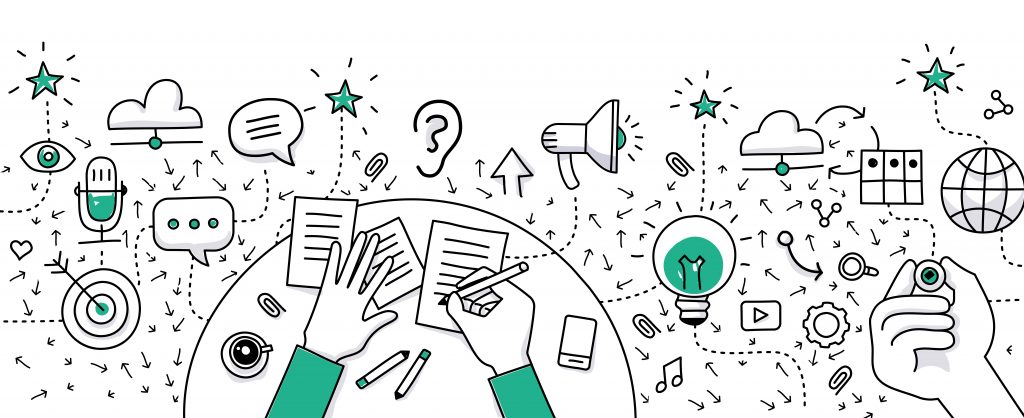 3. From the individual journey to the social one in customer journey mapping While traditional customer journeys took the perspective of one segment in isolation, at the age of platforms it is necessary to consider intersections and influences between different social groups. In fact, crowdsourcing has become one of the key means to get information, to vet options, and to weigh final decisions. We found this to be true across spaces – from acquiring a dog to choosing the most effective educational materials. A journey map that continues to show the target segment in isolation of others fails to show this essential interplay – from the initial source, to the confirming authority, to the vetting audience. The fiction of a self-reliant consumer (or customer), making decisions in isolation, is gone – today’s journey maps need to cater to the social butterfly. 4. Technology and dynamic decision-making in customer journey mapping Today’s possibilities for understanding and mapping the consumer journey are limitless – from consumers (or customers) recording their own journey on the phone, to using the power of big data for clustering, pattern identification and correlation analysis. One example is crowdsourcing for insight generation and validation, e.g. vetting the emerging customer journey maps through a community of industry experts, identifying challenges, gaps and further opportunities. A key opportunity – and application – for customer journey maps is the area of integration with CRM, from routing targeted messaging and follow-up programs, to scripts and targeted offers. The future of customer journey mapping is dynamic decision-making: a customer journey map that could set the framework for dynamic interactions, but also learn from each interaction and improve over time. Ultimately, to match the dynamic decision-making of the bumblebee, the customer journey map itself will need to become dynamic, adaptive and highly contextual, right down to the individual level. The master journey could become a tree of journeys, as it is broken down to different segments, contexts and iterations. From the self-reliant “lonely cowboy” to the bumblebee, the real-life customer journey has changed so much that it could only bring fundamental change to the skill of customer journey mapping itself. At the crossroads of marketing, customer research, design and IT, journey mapping is increasingly becoming a strategic tool for growth. Next, learn how modern marketing utilizes the discipline and how to use journey mapping to satisfy your growth objectives. _ Contact us today to start mapping your customer’s journey.
Frequently Asked Questions
If the customer journey is so chaotic, is there still a point to mapping it? Absolutely. In fact, it’s more critical than ever. The goal of mapping is no longer to define a single, rigid path for customers to follow. Instead, it’s about understanding the entire cloud of activities where your customers live. Mapping this “bumblebee” flight path helps you identify the key moments, motivations, and channels that matter most, so you can be present and valuable wherever your customer zigs or zags next. It’s a shift from creating a path to understanding a territory.
Can you give me a real-world example of a ‘bumblebee’ journey? Of course. Think about someone planning a vacation. They might see an influencer’s post on Instagram, which leads them to Google the destination. From there, they might watch a few YouTube travel vlogs, read hotel reviews on TripAdvisor, and ask for recommendations in a Facebook group. They could then get distracted, only to see a targeted ad a week later that reminds them to book flights directly on an airline’s app. There’s no straight line—it’s a fluid, multi-channel swarm of activity driven by inspiration, research, and social validation.
What do you mean by focusing on the ‘job to be done’ instead of the purchase? Focusing only on the purchase is like only paying attention to the last five minutes of a movie. The “job to be done” is the real problem your customer is trying to solve in their life. For a meal kit service, the job isn’t just “buy our box”; it’s “help me feel like a competent cook without the stress of grocery shopping.” When you map the journey to solve that bigger problem, you uncover opportunities to offer tips, build community, and create content that makes your brand an indispensable partner, not just a transactional vendor.
How does the ‘social’ aspect change how we should approach journey mapping? Older journey maps treated the customer like they were making decisions in a vacuum. Today, every decision is influenced by a network. A modern map must account for these social touchpoints. It should ask questions like: Where do our customers get advice? Who do they trust for reviews? Where do they share their own experiences? Mapping this ecosystem of influence reveals how crucial crowdsourcing and peer validation are in moving someone from consideration to commitment.
Our current journey map is a straight line from A to B. What’s the first step to update our thinking? Don’t throw your old map away—use it as a starting point. The best first step is to begin identifying all the touchpoints that aren’t on that linear path. Talk to your customer service team, look at your social media comments, and analyze your website analytics to find where people enter and exit in unexpected ways. Simply listing these non-linear interactions will help your team break free from the funnel mindset and start seeing the dynamic, messy, and far more realistic journey your customers are actually on.
Key Takeaways
- Shift from Linear Paths to Engagement Clouds: The predictable A-to-B customer journey is obsolete. Modern consumers move like a swarm—erratically and across multiple channels—so your strategy must focus on understanding intent and engaging them within this dynamic cloud of activity, not forcing them down a funnel.
- Focus on Customer Utility, Not Just the Purchase: To earn a larger share of your audience’s life, you must solve for their “job to be done.” Effective journey mapping uncovers real-world customer problems, allowing your brand to provide genuine solutions and build relevance that extends far beyond a single transaction.
- Map the Ecosystem, Not the Isolated Individual: Customer decisions are now crowdsourced and socially validated. Your journey map is incomplete if it only shows one person’s perspective; it must reflect the interconnected ecosystem of social groups, platforms, and influences that shape modern choices.