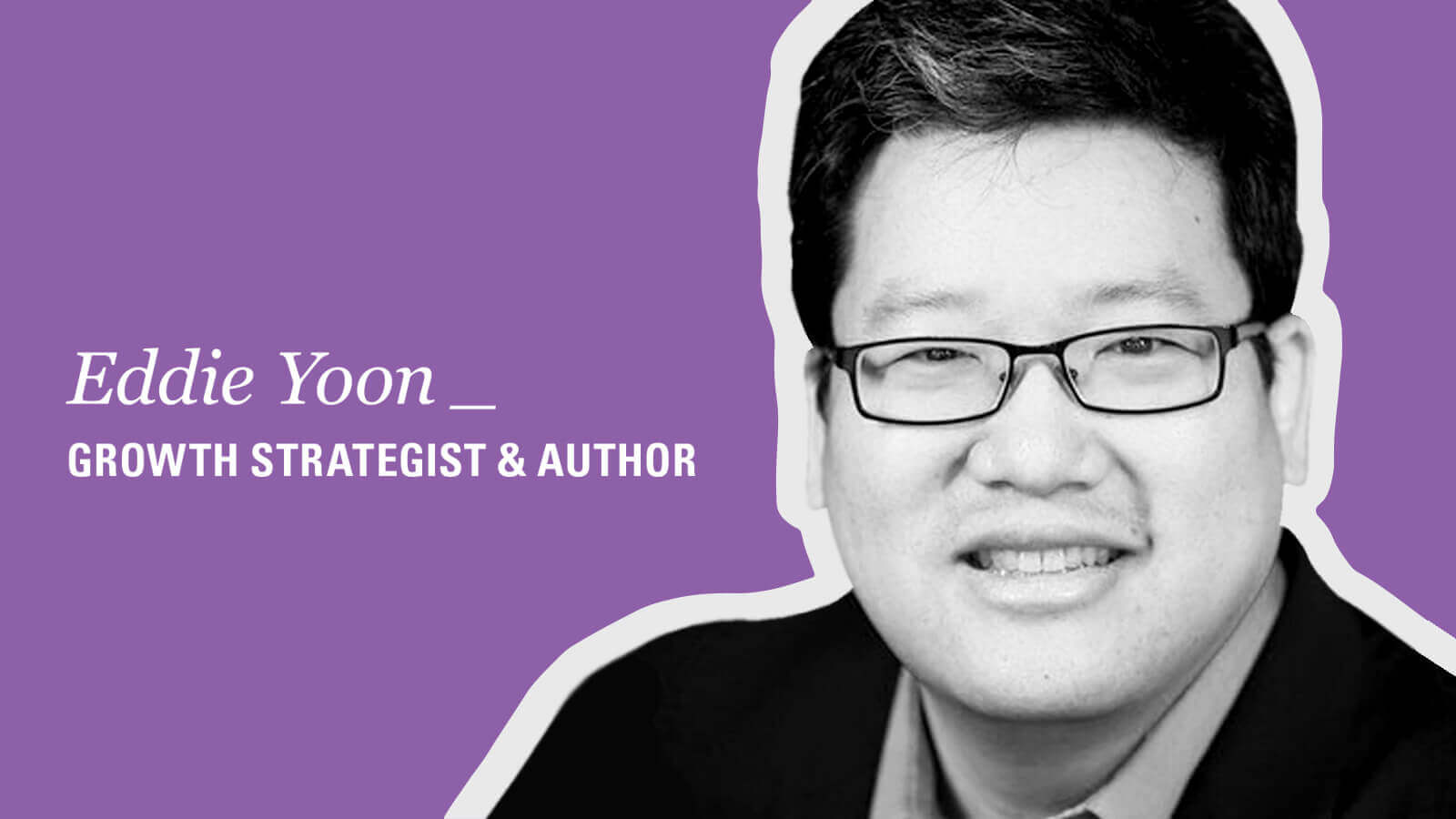
The modern growth playbook is obsessed with personas, segments, and the elusive “average user.” We build strategies for a composite sketch, a statistical ghost that represents everyone and no one. This is a strategy for irrelevance. The real force shaping your market isn’t in the center; it’s at the passionate fringe. Growth strategist Eddie Yoon calls these individuals “superconsumers.” They are not just heavy buyers; they are a living, breathing R&D department for your entire category. They are the signal in the noise, and learning to listen to them is the most critical capability for any leader aiming to design the future.
“They will tell you the good, bad, and ugly about your industry and your brand. These superconsumers provide invaluable feedback with real depth of knowledge.” In conversation with Vivaldi Founder & CEO Erich Joachimsthaler, best-selling author Eddie Yoon reveals how superconsumers can shake up any industry, from office supply manufacturers to TV binge-watchers. With Eddie’s fun and practical insights, you’ll be inspired to care about the customers that care the most. https://vimeo.com/279285476 See below for highlights from their conversation:
Who is Eddie Yoon?
In the world of business growth, most conversations orbit around a single, gravitational pull: competition. The prevailing wisdom is to fight for a bigger piece of the existing pie. Eddie Yoon argues for a different universe entirely—one where you don’t just compete for the pie, you bake a new one. He is a leading mind in growth strategy, known for his counterintuitive yet powerfully effective frameworks that shift the focus from market share battles to market creation. His work provides a playbook for leaders who understand that sustainable growth isn’t about outmaneuvering rivals; it’s about creating a new game where you are the undisputed leader from day one.
A Pioneer in Category Creation and Growth Strategy
Eddie Yoon’s core philosophy is built on the principle of category creation. He champions the idea that the most significant growth comes not from incremental improvements to existing products, but from inventing entirely new categories that redefine consumer behavior and market boundaries. This approach requires a fundamental shift in mindset, moving from a defensive posture of protecting market share to an offensive strategy of creating new demand. It’s a perspective that challenges organizations to look beyond their current landscape and envision what could be, turning unmet needs into thriving new markets. This is the essence of modern brand and innovation strategy—designing the future instead of just reacting to it.
Founder of Eddie Would Grow and Co-founder of Category Pirates
To put his theories into practice, Eddie Yoon founded EDDIEWOULDGROW, LLC, a think tank and advisory firm dedicated to helping companies achieve transformative growth. He is also a co-founder of Category Pirates, a publishing company and syndicate that provides executives with the strategic frameworks to design and dominate new market categories. Through these platforms, he disseminates his actionable insights on how to identify growth opportunities, understand your most passionate customers, and build businesses that define an era. His work serves as a critical resource for leaders aiming to build enduring value in a rapidly changing world.
A Track Record of Transformative Growth
Before launching his own ventures, Eddie Yoon was a partner at The Cambridge Group, a renowned growth strategy consulting firm. There, he honed his expertise by advising Fortune 500 CEOs on how to unlock latent consumer demand and drive substantial growth. His strategies have been instrumental in helping companies generate billions of dollars in revenue by identifying and capitalizing on opportunities that competitors overlooked. His track record isn’t just about theoretical models; it’s about delivering tangible, financial results that reshape industries and create lasting competitive advantages for the organizations he works with.
From The Cambridge Group to Generating Billions in Revenue
During his tenure at The Cambridge Group, Yoon developed and refined the methodologies that now form the bedrock of his teachings. He worked across dozens of industries, discovering universal patterns in how markets evolve and how consumer demand can be catalyzed. This deep, practical experience allowed him to see firsthand how companies that successfully create new categories achieve disproportionate returns. His transition from a top-tier consultant to a thought leader and founder was driven by a mission to make these powerful growth principles accessible to a wider audience of ambitious leaders and entrepreneurs.
The Core Principles of Eddie Yoon’s Philosophy
Eddie Yoon’s approach to growth is anchored in a few powerful, interconnected principles that challenge conventional business strategy. He moves beyond the tired metaphors of funnels and journeys, instead focusing on the dynamic systems of consumer passion and market creation. At the heart of his philosophy is the belief that companies should stop fighting over scraps of an existing market and start creating new value ecosystems. This requires a deep understanding of not just what customers buy, but why they care. By focusing on category design, market expansion, and the insights of your most dedicated customers, you can build a growth engine that is both powerful and sustainable.
Category Creation: Inventing the Future
The central pillar of Yoon’s philosophy is category creation. He asserts that true market leaders don’t just win the game; they invent it. Instead of launching another product into a crowded field, category creators define a new problem and offer a unique solution, thereby establishing themselves as the authority. This strategy is about making the competition irrelevant by carving out a space that you exclusively own in the minds of consumers. It’s a proactive, visionary approach that requires courage and a deep commitment to business transformation, but the rewards are immense, creating a moat that is difficult for others to cross.
The Financial Impact of Creating a New Category
The financial upside of category creation is staggering and provides a clear business case for this ambitious strategy. According to Yoon’s research, companies that successfully create new categories experience a significant multiplier effect on their market value. For every dollar of new sales generated through category creation, a company can expect its market value to increase by an average of $5.60. This is substantially higher than the $3.40 increase seen by other fast-growing companies that focus on competing within existing markets. This data proves that inventing the future is not just an innovative idea—it’s one of the most profitable strategies a business can pursue.
Grow the Pie, Don’t Just Split It
Flowing directly from the idea of category creation is Yoon’s mantra to “grow the pie, don’t just split it.” This principle reframes the goal of business from a zero-sum game of capturing market share to a positive-sum game of expanding the market itself. When you create a new category, you are not stealing customers from competitors; you are often creating new customers or serving existing ones in a profoundly new way. This abundance mindset encourages innovation and collaboration, focusing energy on creating more value for more people rather than on defensive tactics and price wars. It’s a more sustainable and ultimately more rewarding path to long-term growth.
The Power of Superconsumers
Perhaps one of Eddie Yoon’s most influential concepts is the “superconsumer.” These are not just your most frequent buyers; they are the most passionate and knowledgeable customers in a category. They are the lead users who are emotionally invested and often see possibilities for products and services that the companies themselves miss. As Yoon explains, these individuals are a strategic asset, providing a direct line of sight into the future of the market. By identifying, understanding, and co-creating with your superconsumers, you can uncover breakthrough insights that lead to both incremental improvements and radical innovations.
How 10% of Customers Drive Nearly 50% of Profits
The economic importance of superconsumers is undeniable. Yoon’s analysis reveals that this elite group, which typically makes up only about 10% of households in a given category, is responsible for a disproportionate amount of its success—often driving between 30% and 70% of sales and nearly half of the category’s profits. They are the high-intent, high-passion individuals who not only buy more but also influence others and push the category forward. For any leader looking for a strategic advantage, the directive is clear: find your superconsumers. They hold the qualitative and quantitative keys to unlocking your next wave of growth.
Q: In your book, you say superconsumers are those who buy a lot and also care a lot, so they are not simply heavy users of a product?
A: I think it it’s a great distinction you’re calling out, because it’s not just that you buy a lot and care a lot, it also has to be at the category level. I think often people assume that it is about a brand, but I observed that superconsumers buy multiple brands across the most expensive and the least expensive private labels, and they are the most honest about the good, bad and the ugly about your category and your brand. That honest feedback that has a real depth of knowledge, and I found that to be pretty rare.
Q: Are there markets or categories with no superconsumers or can any company read your book and identify a reasonable set of consumer?
A: I can’t say definitively that there is one that has no superconsumers, but the part I find interesting is that as long as you hold on to the philosophy and the values of what it means to people who buy a lot, use a lot, and care a lot, then you actually can be free from constraints of typical assumptions. So I’ll give you an example of Generac, a #1 manufacturer of standby generators. A superconsumer of generators would make no sense, unless you have two houses. Why would you buy more than one generator for the same house, right? But what we had discovered was that the vast majority of people who bought generators bought them because of a bad event – their power went out and it was freezing, or there was a bad hurricane and they were sweltering. But there were a small set of people who were buying these generators with no clear reason why, so we explored what is going on there. We found that the people who were proactive about buying generators tended to have more life insurance than they needed, they tended to be vitamin super consumers, which has the same idea of insurance, and they tended to have more than two refrigerators and freezers. Therefore, the way that you sold and marketed to these consumers was very simple. Why would this consumer spend $10,000 for a generator that they don’t need? Well, they also have $3,000 worth of food stored in their fridge. And that’s a clear ROI for companies.
Q: With the commoditization of markets due to the digital revolution, is it possible that your book on superconsumers may be right for companies today, but perhaps not in the next couple of years to come?
A: The interesting thing about commoditization of markets is that oftentimes, it can be superconsumers driving the commoditization in the sense that they have determined that a particular category is greatest value to them and is the lowest cost version of it, because it serves a very basic need. Then they discover that there is an adjacent category that wasn’t on their radar that serves their same need better. Superconsumers are the ones that I believe are at the root of every disruption. Whether it’s one category being commoditized, another one being created, there’s a superconsumer in the mix there that has caused that shift.
Q: In building a strong platform business, what is the role of superconsumers?
A: Any platform has a beginning and you want to show proof of concept. Superconsumers are often overlapping with lead users and early adopters in a way that’s important to that. The example of Uber is an interesting one, because I have heard other podcasts talk about Uber in areas like LA, which don’t have a lot of public transportation, has really revitalized the restaurant industry, because you can go out and drink. If you add a bottle of wine to your bill, then the margin goes up and that can make or break a restaurant. Someone might use an Uber to get to the airport, but to say: “Let’s go out and thanks to Uber, we can both enjoy ourselves since none of us have to be a designated driver,” has created growth in the restaurant industry while creating growth for Uber. Tune into more of The Business of Platforms podcast here. If you’d like to learn more about Vivaldi’s platform strategy offering, contact us at hello@vivaldigroup.com.
Frequently Asked Questions
Isn’t a “superconsumer” just another name for a loyal customer or a heavy user? Not quite, and the distinction is critical. While a loyal customer is devoted to your brand, a superconsumer is devoted to the entire category. They are so passionate and knowledgeable that they buy from you, your competitors, and even from adjacent categories to solve their core need. This makes them an incredibly honest source of feedback on where your brand and the entire market are headed, rather than just a source of repeat business.
My product is a one-time purchase or in a “boring” category. How can I find superconsumers? Every category has them, but you might need to look differently. It’s less about the frequency of purchase and more about the mindset. As the generator example in the post shows, superconsumers are driven by a deeper motivation. You find them by looking for the people who are proactively engaged and emotionally invested. They might be the ones who have done extensive research, participate in online forums, or use your product as part of a larger system in their life.
Why should I focus my strategy on just 10% of my customers? Isn’t that risky? It’s actually one of the safest bets you can make. This small group isn’t just a revenue driver; they are a living, breathing map to the future of your market. Their needs, frustrations, and innovative uses of products predict where the mainstream market will be in a few years. By focusing on them, you’re not ignoring the other 90%—you’re getting a head start on understanding what that 90% will want next.
How do superconsumers relate to market disruption and commoditization? Superconsumers are the engine of disruption. Because they are always seeking the best solution for their core need, they are the first to move to a new product, service, or category that does the job better. When they migrate, they signal a major market shift. Their behavior can turn one category into a commodity by finding a cheaper, good-enough solution, while simultaneously creating demand for a new, premium category that better serves their passion.
This is insightful, but where do I start? How do I actually find and learn from my superconsumers? The first step is more about qualitative insight than quantitative data. Look for the outliers in your current customer base—who is buying strange combinations of products, or who is using your service in an unexpected way? Once you identify a handful of these individuals, reach out and have a real conversation. Ask them about their lives, their goals, and their frustrations within the category. Their stories will give you more strategic direction than a thousand surveys.
Key Takeaways
- Your Most Passionate Customers Are Your Greatest Strategic Asset: Shift your focus from the average user to your “superconsumers.” This top 10% of customers, who drive up to 70% of sales, are your most reliable source for breakthrough insights and a clear roadmap to future category growth.
- Create New Markets, Don’t Just Compete in Them: The most powerful growth engine isn’t capturing market share; it’s creating an entirely new category. This strategy makes the competition irrelevant and generates significantly higher market value, turning innovation into a durable financial advantage.
- Follow Superconsumers to Predict and Lead Disruption: Market shifts don’t happen in a vacuum—they are led by your most engaged customers seeking better solutions. By understanding their behaviors and unmet needs, you can anticipate where the market is heading and proactively build the next category before it even exists.
Related Articles
- Superpowers of Superconsumers, with Eddie Yoon – Vivaldi Group
- Erich Joachimsthaler and Eddie Yoon on Ratcheting Up Platform Businesses With ‘Superconsumers’
- The Best Strategies for Effective Brand Innovation in Today’s Market
- Reinventing Brand Strategy: The Holistic Brand Model – Vivaldi Group
- Interaction Fields: Redefining Customer Engagement | VIVALDI