
For decades, strategy has been about building moats—proprietary data, locked-in customers, and closed ecosystems. We built fortresses. Web3 dissolves the very ground these fortresses were built on. It replaces solid ground with a fluid, interconnected field of interaction where value flows between participants, not just from them. In this world, hoarding data is less powerful than enabling its secure exchange. Owning the customer relationship is less valuable than empowering a community to co-create. Navigating this shift requires more than a new map; it requires a new compass. The core task for leaders is to move beyond tactical experiments and build a coherent strategy for web3 value realization.
The second of this series of three articles about the metaverse and Web3+ discusses a framework and model to understand how new technologies can help achieve business goals and how they affect consumer behavior and society. Read part one here. In The Interaction Field: The Revolutionary New Way to Create Shared Value for Businesses, Customers, and Society (2020) and our research since mid-2015, we traced the modern evolution of business enterprises, from a world dominated by big, traditional, asset-heavy, command-and-control “value chain” companies like GE and GM, through several phases, the first being dominated by early-Internet “platform” firms like Amazon and Google, the second being the social and mobile era which catapulted Apple forward, and created social networks such as Facebook. Today, these phases are often described as Web1 and Web2. The first two phases have been well described as the phases where platform companies grew, the emergence of the platform economy or the platform revolution.[1] In 2020, we contended that we are entering a third phase, the world of metaverse and Web3 technologies, a future where a new type of firm, namely “interaction field” companies will flourish.[2] Web1 and Web2 had a profound impact on how companies create value and how they achieve competitive advantage. Until then, strategy evolved around deciding where to compete and how to compete in a market. Good strategy was about choosing a market and establishing barriers to entry such as building strong brands or establishing customer switching costs. Competition was essentially a way of competing in a World of Walls. Web1 and Web2 changed this world for companies and brands. Today, competition takes place in a World of Webs where everything connects: things, people, machines and companies and more — a world of hyperconnectivity. Industry or category boundaries have blurred, and barriers of entry have become as porous. We believe that the metaverse will accelerate this world of connectivity, and Web3 technologies will put the World of Web in overdrive and create the convergence of all sorts of worlds: the virtual world, the real world, or the mirror world, which is essentially the real world in digital form. Interaction field companies will reach their prime in these worlds. A defining difference between “interaction field” and “value chain” and “platform” companies is that interaction field firms view consumers or users not as targets, audiences to capture, or a source of transactions to be aggregated but they see consumers as a system and part of a complex network of relationships, from close-in family and friends to society at large. In this network or system, every consumer has his or her own set of goals that ladder up to values and beliefs. Consumers perform a set of activities to achieve these goals and priorities in the context of their daily lives. Value creation is about solving the challenges and problems of consumers as they seek to optimize the range of actions and activities they must perform to achieve their goals.[3] Interaction fields then optimize this entire system, ranging from consumers’ daily goals to broader and more important challenges of society. A second difference is that interaction field companies open up their most important customer relationships to a wide range of stakeholders and third parties who provide new value in the field. This contrasts with value chain and platform companies who are hoarding and aggregating massive data pools in their internal systems such as their CRM or secured customer data platforms. For example, take a platform such as Uber, or an ecosystem such as Airbnb. Essentially these firms hoard transactions and data from riders and drivers, or from travelers and hosts, and they optimize their businesses to extract maximum value for themselves.  Interaction field companies instead create a nucleus of interactions with customers or consumers with maximum value, and then build an open architecture around it that attracts partners and third parties to create shared value for everyone. Marshall van Alstyne and Geoff Parker call this the inverted firm, where a firm seeks to externalize value creation to others by designing interactions and rules of governance accordingly.[4] John Deere for example built a network of farmers who ride on Deeres, who share data from the health of a plant in the field to overall farm productivity. Instead of hoarding the data on its secure cloud servers, John Deere enriches the data and makes it available to fertilizer or crop suppliers, and a broad range of others that create value – solving major challenges that farmers and consumers face from making farms profitable, reducing water depletion, and ensuring healthy and sufficient food supply around the world. Interaction field companies maximize interactions in an entire field of value creation. Platform companies instead like to own the transactions, and own the customer. A third no less important attribute of interaction field firms is that they motivate interactions far beyond their existing industries, such as agriculture or automotive. They encourage value creation through partnerships, platforms and ecosystems across different industries, sectors or categories. Ant Group’s nucleus is Alipay for example, but it operates a number of platforms and ecosystems that have emerged and sit on the top of payments including lending, wealth management and even health insurance and many others. In a way, it makes the traditional concept of categories and industries irrelevant, since value creation is achieved across new market spaces that are defined around consumer or even societal challenges.[5] This means automotive companies solve for mobility, not just selling a better car. In short, interaction field companies change the nature of value creation for consumers, beyond mere fulfillment of needs and emphasizing relevant attributes through branding, or hurling new products and services in the name of innovation at consumers. In the interaction field, consumers innovate for themselves, they solve problems, collaborate with companies and create competitive advantage for them. They assume an active role in value creation. They change the way companies are configured beyond just the optimizing of their functions or their own activities along the value chain, and they change the way they create value beyond existing industry or traditional category boundaries. Now, let’s peer into the metaverse after donning an “interaction field” lens. The firms vying to build and equip consumers to enter the metaverse are primarily platform companies or ecosystems like Meta Platforms, Microsoft, Apple, and all the other tech giants that supply the essential tools such as Nvidia. Much like German immigrant Levi Strauss sold workman’s clothing, today known as Levi’s jeans, to hopeful farmers during the California Gold Rush in the 1870s, purer-play virtual reality firms like the online game platforms Roblox or Minecraft or the Ethereum-based environments such as Decentraland of The Sandbox aren’t any better. Their primary channel of value creation is through aggregating transactions, building large audiences of players that become gullible consumers or users susceptible to monetization via in-app purchases or by issuing and selling tokens. They too merely optimize their own worlds, rather than enabling meaningful interactions, sharing them, and creating value for everyone.
Deconstructing Web3: Core Technologies and Promises
To see beyond the hype, we need to understand the architectural shifts that Web3 introduces. It’s not a single product but a stack of technologies rewriting the rules of digital interaction. These core components—the semantic web, decentralization, and immersive interfaces—are not just incremental updates. They represent a fundamental change in how value is created, controlled, and experienced online. For leaders, grasping these mechanics is the first step toward building a strategy that doesn’t just participate in the future but actively shapes it. This isn’t about chasing trends; it’s about understanding the new primitives of digital business.
The Semantic Web and AI-Driven Customization
Web3’s intelligence layer is built on the concept of a Semantic Web—an internet where data is structured and interconnected, understandable to machines as well as humans. This moves us from a web of pages to a web of meaning. Instead of just linking documents, we link concepts, creating a rich, contextual data fabric that AI can interpret and act upon. For brands, this is the key to moving beyond superficial personalization. It enables the creation of truly intelligent experiences that anticipate user needs and deliver value in real-time, a core component of modern AI and data solutions. The goal is an internet that adapts to the user, not the other way around.
Decentralization and Service Resiliency
At its heart, Web3 is a movement away from centralized control. Using technologies like blockchain, it distributes data and authority across a network rather than concentrating it in the hands of a few platform giants. This architecture offers more than just a philosophical ideal; it delivers tangible business advantages. By removing single points of failure, services become inherently more resilient and secure. Data becomes transparent and verifiable, fostering a new kind of trust with consumers. This shift also redefines value exchange, enabling direct peer-to-peer transactions with greater efficiency. It’s a move from closed data silos to open, interoperable ecosystems where value flows more freely.
Virtual and Augmented Reality (VR/AR)
While decentralization provides the foundation, immersive technologies like VR and AR provide the human interface for Web3. These are the windows into the spatial web, transforming the internet from a 2D screen we look at into a 3D space we inhabit. For businesses, this opens a new frontier for brand innovation and customer experience. But these are not just prettier versions of today’s websites. Built on Web3 principles, these virtual worlds are designed with user ownership and privacy at their core. Digital assets are owned by users, not platforms, and interactions can occur directly between peers, creating a more equitable and engaging digital environment.
Is Decentralization the Key to Web3 Value Realization?
As for the most fundamental societal challenge Web3 enthusiasts are seeking to solve, the pathetic reality is that the lion’s share of the value on which the tech giants’ staggering market capitalizations are currently based on comes from their proprietary ownership of the data generated by their own customers. As I noted in Newsweek, “The dominant digital platform model that Big Tech uses represents a fundamental mismatch between the value they derive from the day-to-day gusher of data generated by their billions of customers, and the value to those customers—that means all of us—of the products and services they profess to provide for free.”[6] The World Economic Forum observes that the decentralization of platforms is destined to broaden the value base of beneficiaries of data generators, who will in time graduate into full-fledged data owners: Web3…harnesses blockchain [technology] to “decentralize” management, thereby reducing the control of big corporations, such as Google or Meta, and making it more democratic. It is defined by open-source software, is trustless – doesn’t require the support of a trusted intermediary – and is permissionless (it has no governing body).[7] That an overwhelming share of the value generated by cryptocurrencies and NFTs – the first most visible manifestation of Web3 – has so far accrued to assorted celebrities, crypto snake oil salesmen, and sports stars is not promising. As the cryptocurrency boom seems likely to end in a big bust, what are we to make of Web3’s aspirations to become the vehicle for more fairly distributing the inherent value of data through the magic of decentralized blockchain technology? For starters, in a Web3 world, your activities and the data they generate would no longer be hosted on proprietary servers owned by Google or Amazon, which use them to harvest the value from it (i.e., sell advertising that targets you) but on networks of computers using blockchain. Web3 transactions will be conducted not in fiat currency (which benefits intermediaries such as banks who extract fees) but through your crypto-wallet and websites hosted through decentralized applications, or “dapps.” Sangeet Paul Choudary, one of the leading scholars of the merits and demerits of the platform economy, considers the advent of Web3 as promising an alternative model, or “organizing mechanism,” to now-dominant platform firms like Google, Meta, and Amazon. In his view, these platforms’ primary shortcomings are their propensity for mass standardization as opposed to customization: The largest businesses today – Facebook, Google, Amazon, Apple, Airbnb and others – aggregate a market around their platform…and standardize the core interaction supported by the platform. The purchase experience for a book is not too different from the purchase experience for an item of clothing on a horizontal online marketplace. This standardization helps achieve scale…however, standardizing the core interaction…involves a trade-off: the loss of end-user context.[8] Loss of end-user context means failure to solve the problems and challenges that consumers as a system have. Interaction field firms have a different architecture from platform companies. An illustrative example is the difference between Google and Tesla. Google’s business model is based on selling ads at nearly infinite scale to users of its search engine. You are the product. Period. End of story.
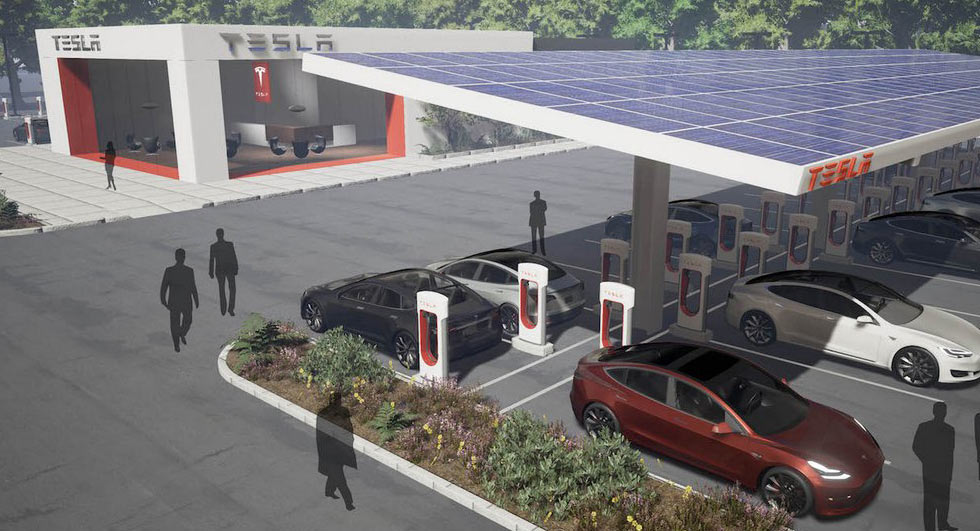
Tesla’s open architecture drives ecosystem innovation. The firm’s success is not at its core derived from its ability to build a better, faster, or cheaper electric car although the automotive industry and major competitors appear to believe so. In the interaction field model, the primary source of value and innovation is on the demand side, not the supply side. Tesla’s interlocking ecosystems include its Supercharger charging network, which in Europe is accessible to all EV drivers. In May 2022, Tesla announced plans to open its Supercharger network in the U.S. to all EV drivers as well. As Elon Musk commented, “We’re trying as best as possible to do the right thing for the advancement of electrification, even if that diminishes our competitive advantage.” This open architecture benefits not just the global community of EV drivers but helps to accelerate the digital transformation and sustainability of the entire auto industry and other industries as well. Those drivers, in turn, collectively contribute data to a different system called Autopilot, as the data generated from every mile driven pushes Tesla closer to its ultimate goal of truly autonomous mobility. That data also connects the community of EV drivers to the California electric grid network, which lets owners of solar rooves share electricity with other owners of solar rooves, to power not just their Teslas but their houses. The data is the fuel of value creation — the open architecture its chassis. Let’s look at LEGO from a similar perspective. The resident geniuses at LEGO HQ in Billund, Denmark are not the only drivers of the innovation that creates successive generations of LEGO sets. The company more heavily relies on an innovation ecosystem, a globally distributed network of partners and collaborators. One example is called LEGO IDEAS, which includes AFOLS (Adult Fans of LEGO), a community of fans, parents and kids like you and me that collectively co-creates innovation. After you put an idea up on LEGO’s website, if that idea gets 10,000 votes through social media, LEGO produces it and compensates the inventor. LEGO externalizes innovation and new idea generation beyond the company, in the spirit of the inverted firm in the platform economy.[9]

Earlier this year, Kirkbi, the parent company of the LEGO Group, announced its entry into the metaverse in partnership with Fortnite-maker Epic Games. Their joint goal is to build a “kid-friendly metaverse.” Whether the kid-friendly metaverse that ensues will also be a Web3 enterprise, let alone an interaction field firm, is still very much TBD. That said, LEGO’s open architecture is a precursor to a potential convergence of the metaverse and Web3 in a virtual Legoland. Glimpses and glimmerings of the vast store of value that transcends the feverish and adolescent speculative yearnings of the Bored Ape Yacht Club can be seen in the late 2020 launch by the Crop Sciences division of Bayer and enterprise blockchain provider BlockApps of the TraceHarvest Network. Its stated aim is to “set new standards in sustainability and drive digital transformation and food system resiliency that will shape the future of the agriculture industry.”[10] These partners and collaborators comprise an ecosystem replete with powerful interaction field characteristics. The network is not just “the first blockchain solution of its kind to track and trace the full lifecycle of agricultural products starting at the seed source.” It is a shared open platform from which “farmers, manufacturers, distributors and processors can selectively share and review data within a single, secure platform, making activities available to the entire chain, and allowing all parties to identify and address product tracking and integrity issues faster than previous manual processes allowed…Member farmers, manufacturers, distributors and processors use the same TraceHarvest network to track where their products are going, providing them with full visibility and traceability into the source of their crops.”
The Pragmatic Hurdles: Navigating Web3’s Adoption Challenges
For all its promise, the transition to a decentralized digital world isn’t a simple flip of a switch. The architecture of Web3 introduces a new set of complexities that business leaders must understand not as roadblocks, but as the terrain of a new competitive landscape. These challenges aren’t just technical; they are economic, structural, and behavioral. Acknowledging them is the first step toward building a resilient strategy. The goal isn’t to wait for a perfect, frictionless system to emerge, but to build the capabilities to operate within its dynamic and evolving reality. This means moving beyond hype cycles and engaging with the practical questions of implementation, governance, and user adoption.
Economic and Scalability Issues
The promise of blockchain is immense, but the current reality is that deploying these technologies effectively remains a significant challenge. A 2022 MIT CISR survey revealed a stark gap between ambition and execution: while effectiveness with new technologies like blockchain is tied to growth, only a mere thirteen percent of executives felt their companies were “very effective” at it. This isn’t just a matter of technical skill; it’s an economic one. Many blockchain networks face the “blockchain trilemma”—a struggle to simultaneously achieve decentralization, security, and scalability. High transaction fees and slow processing times on some networks can make them impractical for high-volume, low-margin applications, creating a barrier for businesses that need to deploy solutions at scale.
Governance and Standardization Gaps
In a world without central authorities, who makes the rules? This is the core governance challenge of Web3. While decentralization aims to democratize control and reduce the power of tech giants, it also creates a vacuum where standards are fragmented and decision-making can be slow and contentious. The World Economic Forum highlights that Web3’s design is meant to harness blockchain to make management more democratic. However, without universally accepted protocols for identity, data exchange, and dispute resolution, creating seamless, interoperable experiences for users is incredibly difficult. For large enterprises, this lack of standardization introduces risk and uncertainty, making it hard to commit to long-term investments in a specific protocol or platform that might not achieve mass adoption.
Data Privacy and Security Concerns
Web3 reframes the entire concept of data ownership. Instead of data living on servers owned by Meta or Google, it resides on a distributed network. This shift is powerful, theoretically giving users control over their digital footprint. However, it also introduces new security paradigms. While blockchains themselves are highly secure, the applications built on top of them, and the user-managed “wallets” that hold digital assets, are frequent targets for sophisticated hacks and phishing schemes. The immutable nature of the blockchain means that fraudulent transactions are often irreversible, creating high stakes for users and a significant educational hurdle for brands looking to guide their customers into this new environment safely.
The Digital Divide and Technology Gaps
The leap from Web2 to Web3 is not just a software update; it’s a hardware one, too. The rich, immersive experiences promised by the metaverse and the computational demands of decentralized applications require significant processing power. As noted by industry observers, Web3 demands more powerful devices than its predecessor, meaning its widespread adoption is contingent on users upgrading their hardware. This creates a significant accessibility issue, potentially widening the digital divide between those who can afford the latest technology and those who cannot. For brands with a global or socioeconomically diverse customer base, this technology gap is a critical strategic consideration that will shape go-to-market timing and tactics.
Sizing the Opportunity: Web3 Market Growth and Projections
Despite the hurdles, the strategic imperative to engage with Web3 is becoming undeniable. The disconnect between current capabilities and future potential represents one of the most significant growth frontiers for modern enterprises. The market isn’t waiting for laggards to catch up; it’s being built by early movers who are willing to experiment, learn, and position themselves for the next wave of digital interaction. Understanding the scale of this shift is crucial for securing the executive buy-in and investment needed to move from observation to action. The numbers paint a clear picture: Web3 is transitioning from a niche experiment to a foundational element of the future economy.
Current Corporate Effectiveness
The data on corporate readiness for Web3 is sobering and presents a clear call to action. The same MIT CISR study that highlighted the growth benefits of new technologies also found that 36% of leaders admitted their companies were “only slightly” or “not at all effective” at using them. This gap between the recognized potential of technologies like blockchain and the ability to implement them is where competitive advantage will be won or lost. It signals a massive need for new skills, updated organizational structures, and a clear-eyed business strategy that connects technological capabilities to tangible outcomes. The few who master this will define their industries for the next decade.
Future Market Valuations
While current adoption rates may be nascent, the projected growth of the Web3 ecosystem is explosive. According to Grand View Research, the Web3 market is on a trajectory to reach an astonishing $33.53 billion by 2030, expanding at a compound annual growth rate of nearly 50%. This isn’t just incremental growth; it’s a paradigm shift signaling a massive reallocation of value and attention. For business leaders, these projections transform the Web3 conversation from “if” to “when and how.” The opportunity is not just in building new products but in fundamentally rethinking business models around decentralization, community ownership, and direct-to-consumer interaction.
Strategic Pathways to Web3: Four Models for Corporate Adoption
Engaging with Web3 isn’t a one-size-fits-all proposition. The right approach depends on a company’s risk appetite, industry dynamics, and strategic objectives. As MIT CISR research suggests, companies choose different paths based on these factors. Rather than making a single, all-or-nothing bet, leaders can adopt a phased approach that aligns with their organizational readiness. We see four primary strategic models emerging, each offering a distinct way to engage with the decentralized future. Choosing the right path requires a clear understanding of not just the technology, but how it can amplify your core brand purpose and create new forms of value for your customers.
The Observer: Wait and See
The Observer is a posture of active patience. Companies in this mode are not ignoring Web3; they are strategically monitoring its development from the sidelines. They invest in research, educate their leadership teams, and track the experiments of more aggressive competitors. This low-risk approach is suitable for organizations in highly regulated industries or those with limited discretionary resources. The primary goal is to avoid costly early mistakes while building the foundational knowledge needed to act decisively when the market matures or a clear use case emerges. The risk, of course, is being left behind if the pace of change accelerates unexpectedly.
The Explorer: Experiment and Learn
The Explorer moves from passive observation to active experimentation. This model involves launching small-scale, low-risk pilot projects designed for learning, not immediate ROI. This could look like issuing a commemorative NFT, creating a branded experience in an existing metaverse platform, or testing a blockchain-based supply chain solution with a single partner. These experiments serve as valuable organizational learning tools, helping teams build practical skills, understand user behavior in new environments, and identify the most promising applications for their business. It’s about buying a relatively inexpensive “ticket to the game” to understand the rules before placing bigger bets.
The Specialist: Targeted Offerings
The Specialist identifies a specific, high-potential Web3 application that solves a clear problem or serves a niche audience and commits to building a best-in-class solution. This is not a broad experiment but a focused strategic initiative. A luxury brand might create a digital authentication system for its products using NFTs, or a media company could launch a token-gated community for its most loyal subscribers. This approach requires a deeper investment and a clearer business case than the Explorer model, but it allows a company to build a defensible position and generate real value without having to transform its entire business at once.
The Pioneer: Go All In
The Pioneer views Web3 not as an add-on but as the future core of their business. These companies are re-architecting their models around decentralization, community ownership, and token economies. This path is reserved for the boldest, often digitally native, organizations or incumbents willing to disrupt themselves. It involves significant investment, a high tolerance for risk and ambiguity, and a long-term vision to build and lead a new market category. Pioneers aim to create the foundational platforms and protocols on which the rest of the industry will eventually build, positioning themselves to capture a disproportionate share of the value created.
Emerging Frontiers: Key Trends Shaping the Next Wave of Value
As the Web3 landscape matures, several powerful trends are moving from the fringe to the forefront, offering a clearer glimpse into where the most significant value creation will occur. These are not isolated technological developments but interconnected shifts that are reshaping how we think about assets, infrastructure, and digital interaction. For strategists, these frontiers represent the next set of opportunities to build meaningful customer engagement and durable competitive advantage. They signal a move beyond speculative assets and toward real-world utility, integrating the digital and physical worlds in ways that were previously impossible.
Tokenization of Real-World Assets
One of the most profound applications of Web3 is the ability to turn tangible, real-world assets—like real estate, art, or even a stake in a private company—into digital tokens on a blockchain. This process, known as tokenization, makes illiquid assets divisible, tradable, and more accessible to a broader pool of investors. For businesses, this opens up new avenues for capital formation and investment. Imagine fractional ownership of a commercial building or a venture fund, managed transparently on a blockchain. This trend promises to transform finance by democratizing access to asset classes previously reserved for institutional or high-net-worth individuals.
Decentralized Physical Infrastructure Networks (DePINs)
DePINs represent a groundbreaking model for building and managing real-world infrastructure using blockchain technology. Instead of a single corporation building a network (like a telecom building a 5G network), DePINs incentivize individuals and small businesses to contribute their resources—like Wi-Fi bandwidth, data storage, or sensor data—in exchange for token rewards. This crowdsourced approach can build infrastructure faster, cheaper, and more resiliently than traditional centralized models. With a market already valued at around $30 billion and growing, DePINs are poised to disrupt everything from cloud storage and wireless connectivity to energy grids and mobility networks.
The Evolution of Web3 Gaming
Gaming has long been a testing ground for new technologies, and Web3 is no exception. The key innovation is the concept of true asset ownership. Through NFTs, players can genuinely own their in-game items—like characters, skins, or virtual land—and can trade or sell them on open marketplaces, independent of the game developer. This creates a player-owned economy where time and skill invested in a game can translate into real-world value. This shift from a closed, developer-controlled economy to an open, player-driven one is a fundamental change that will attract new audiences and create powerful network effects for the most successful titles.
The Impact of Regulation and Green Blockchains
For Web3 to achieve mainstream adoption, it needs regulatory clarity. New frameworks, like the EU’s Markets in Crypto-Assets (MiCA) regulation, are beginning to provide clear rules of the road for businesses and investors. This regulatory certainty is crucial for attracting institutional capital and giving large corporations the confidence to integrate Web3 technologies into their operations. Simultaneously, the industry is addressing environmental concerns by moving toward more energy-efficient “proof-of-stake” consensus mechanisms, making “green blockchains” a key factor for enterprises focused on sustainability and ESG (Environmental, Social, and Governance) goals.
AI’s Role in Web3 Social Platforms
The convergence of Artificial Intelligence and Web3 is set to create a new generation of intelligent, personalized, and autonomous digital experiences. In Web3 social platforms and dApps, AI can be used to automate complex tasks, personalize content feeds without relying on centralized servers, and create more sophisticated autonomous agents or NPCs (non-player characters) in metaverse environments. This fusion is a core component of building a more intelligent and responsive decentralized internet. At Vivaldi, we see the integration of AI and new tech as a critical driver of future growth, enabling companies to create value in ways that are both highly personalized and respectful of user sovereignty.
How Will Web3 and the Metaverse Create Real Value?
Looking at the metaverse and Web3 merely from a technology perspective is not helpful. As Alex Cahana, partner at Ark Invest already said: “Technology does nothing. It is what people [emphasis added] do with technology that matters.”[11] Looking at these metaverse and Web3 developments from a consumer, strategy and business perspective, as articulated in the interaction field model, reveals their enormous potential in creating value. By value, we mean solving new challenges, difficult and intractable problems of consumers and society, and creating new competitive advantages for collaborators. This leads to creating real and shared value for everyone. In our world, value is not created through network effects alone, value is created through solving problems and challenges of consumers and society in the interaction field. What real, new and intractable problems does the metaverse or Web3 really solve? It is difficult to foresee the many different paths of evolutions the metaverse and Web3 may take. We have three thoughts:
- A first critical path is the consumer and a deep understanding of the challenges and problems of consumers as a system – as an individual identity as part of society. The question not to ask is: what products or services do these new technologies create for consumers? Instead, the question to ask is: how do these technologies help to improve people’s lives? Do they solve something? Do they enable them? Do they give people time back?Companies must understand the challenges and problems of people and society really, really well. Today, this is not the case. Most use cases don’t solve anything useful yet.[12] Technology is cumbersome and slow.One of the great steps in this direction is related to the technologies that enable the building of digital identities using the Self-Sovereign Identity or SSI approach. What this really means is that consumers become data owners, giving them full control in their digital or crypto wallets. Even if you record your Peloton bike session with the Peloton digital app, it isn’t Peloton who owns the data, but you. This changes fundamentally how to think of consumers – as passive recipients or audiences of advertising, or as targets for a company’s products, or prospects to be converted. We are looking at technologies that enable consumers to become active participants in creating value, consumers who understand where and how to own their data, and how to share their data, whether it is a digital asset or piece of art via NFTs or the data that the rich metaverse or Web3 contexts enable to be collected on behalf of consumers.This will be a significant departure from today. When consumers are truly involved in value creation, when they know how they can build the value, and can take their data anywhere they want to, and can co-create products and services, then it is very likely that startups, established companies or brands can build valuable use cases that have a major impact on consumer behavior. This will be a significant change from today’s value creation through aggregation of data, realizing network effects and monetizing the value creation as Facebook or Google practice, and most other platform businesses practice today.
- A second path we are looking into concerns the evolution regarding tokenization which will create an exponential increase in interaction velocity across an interaction field. This will clear the way for sharing of valuable data across a broader set of participants or partners with zero distance to consumers, a sort of value-creating network. Because the tokens are secured on distributed ledger technologies, or the blockchain using smart contracts, the distinction between internal versus external interactions becomes irrelevant. It will be a trusted system of value exchange. In the case of John Deere and agriculture, it is feasible that farmers create significant value for themselves via digital tokens, which they can convert into substantial cash, as a very large chain of partners and participants benefit in the process as food travels from the farm to the table of consumers.
- Finally, the third path that we are studying intensively concerns technologies that enable the formation of entirely new companies or organizations built on code and encrypted on the blockchain that create value in an interaction field. As value is created in the nucleus in the interactions between a company or brand and its consumers, and as these interactions are tokenized, this will enable new collaborations between existing platforms and traditional pipeline businesses but also new organizational forms such as “decentralized autonomous organizations” or DAOs. Brands can develop communities and reward customers for their engagement and involvement by issuing tokens. Would John Deere, for example, issue tokens or voting rights in exchange for farm productivity or profitability data from farmers? This would reward farmers for the value creation in agriculture and the food supply chain as described in “The Interaction Field” book in Chapter 2. Entire new organizations or communities can emerge that create and share value with other participants in the interaction field. These organizations could be organized around fundraising for major social missions or sharing projects, such as eradicating cancer or accelerating K-12 education or other major consumer and social issues. These types of DAOs could be structured as open protocols which enable everyone to participate that can create value.
In the third part of this series of three essays, we will describe several actual case studies in healthcare and education. [1] “Platform Revolution: How Networked Markets Are Transforming the Economy―and How to Make Them Work for You,” Marshall W. Van Alstyne, Geoffrey G. Parker, and Sangeet Paul Choudary, March 28, 2016. [2] The Interaction Field: The Revolutionary New Way to Create Shared Value for Businesses, Customers, and Society; Erich Joachimsthaler, Public Affairs, 2020 [3] I have first articulated this notion in my second book: “Hidden in Plain Sight: How to Find and Execute Your Company’s Next Big Growth Strategy,” Erich Joachimsthaler, 2007. [4] Marshall W. Van Alstyne and Geoffrey G. Parker (2021), “Digital Transformation Changes How Companies Create Value,” Harvard Business Review, December 17. [5] I like the concept of growth domains or market spaces where companies solve similar consumer challenges and problems (see Joachimsthaler 2007). This idea was pioneered by Rita McGrath who speaks of competitive arenas where groups of market players apply similar strategies. “The End of Competitive Advantage,” Rita McGrath, Harvard Business Review, August 7, 2013. [6] “Big Tech Must Respect What Consumers Want in the Post-Pandemic Era” Erich Joachimsthaler, Newsweek, 6/24/21 [7] “The Evolution of the Internet to Web3,” Rebecca King, Engagement Lead,” World Economic Forum, Feb 1, 2022 [8] Sangeet Paul Choudary, “The Building Blocks Thesis,” Vol. 1, Apr 26, 2022 [9] “Digital Transformation Changes How Companies Create Value,” Marshall W. Van Alstyne and Geoffrey G. Parker, Harvard Business Review, Dec. 17, 2021. [10] “BlockApps Launches Agribusiness Blockchain Network ‘TraceHarvest’ Following Success with Bayer” Press Release, Nov. 18, 2020 [11] The Future of Blockchain and Healthcare with Dr. Alex Cahana, Ark Invest, YouTube [12] “Jorge Stolfi: ‘Technologically, bitcoin and blockchain technology is garbage’,” Jordi Perez Colome, El Pais, July 7, 2022. *The authors would like to thank Dr. Martha Boeckenfeld and Alberto Velasco for valuable comments on previous versions of this article.
Frequently Asked Questions
What’s the real difference between a “platform” like Google and an “interaction field” company? Think of it as the difference between a walled garden and an open field. A platform like Google or Uber builds its business by aggregating users and owning their data and transactions to extract value for itself. An interaction field company, like the modern John Deere, creates a nucleus of value and then opens its architecture for others to build upon. It shares data and invites partners into an ecosystem, creating shared value for everyone involved—from the farmer to the fertilizer supplier to the end consumer. The focus shifts from owning the customer to empowering a whole system.
Decentralization sounds like giving up control. Why is that a strategic advantage? It’s less about giving up control and more about building a more resilient and trustworthy foundation for your business. Centralized systems create single points of failure and force customers and partners to simply trust that you’ll manage their data properly. Decentralization, using technologies like blockchain, builds trust directly into the system. This transparency fosters deeper loyalty and encourages a wider range of partners to co-create with you, leading to innovation that a single company could never achieve on its own.
This all seems complex. What’s a practical first step for an established company to take into Web3? You don’t need to re-architect your entire company overnight. The smartest entry point is to act as an “Explorer.” Start with a small-scale, low-risk pilot project that is designed purely for learning. You could launch a digital collectible (NFT) to understand digital ownership, create a simple branded experience in an existing virtual world, or test a blockchain solution with a single supply chain partner. The goal isn’t immediate ROI; it’s to build practical skills and discover where the technology can best serve your specific business goals.
Beyond the hype, what are the real-world challenges currently holding Web3 back? While the vision is powerful, the transition isn’t seamless. There are significant pragmatic hurdles to overcome before mass adoption. Many decentralized networks still struggle with scalability, meaning they can be slow and expensive for high-volume use. There’s also a lack of universal standards, which makes creating smooth, interconnected experiences difficult. Finally, the user experience can still be complex and intimidating for the average person, presenting security risks and a steep learning curve that we must solve for.
How does Web3 move beyond speculative assets and actually solve problems for people? The true potential of Web3 has little to do with speculative trading. It’s about using its core technologies to solve fundamental human and business challenges. This looks like giving individuals true ownership and control over their digital identity and data, from health records to creative work. It means creating transparent supply chains where you can trace a product from its origin to the store shelf. Ultimately, the value is realized when we use these tools to build more equitable, efficient, and collaborative systems that improve people’s lives.
Key Takeaways
- Trade Fortresses for Fields: Stop building closed systems designed to lock in customers. The future of value creation lies in “interaction fields”—open, collaborative ecosystems where you empower users and partners to co-create solutions, generating shared and more durable growth.
- Decentralization is a Trust-Building Tool: Look beyond the technical complexities of blockchain. The strategic value of Web3 is its ability to give users true ownership of their data and assets, fundamentally shifting the power dynamic and creating a new foundation of trust that centralized platforms cannot match.
- Define Your Web3 Posture: Entering Web3 isn’t a single leap but a strategic choice. Determine whether your organization will be an Observer, an Explorer, a Specialist, or a Pioneer, and align your approach with your company’s core objectives and readiness for change.