For decades, we’ve designed organizations like machines, with hierarchies, inputs, and outputs. Now, we design them like software platforms, with networks, nodes, and interfaces. Both models are wrong. They ignore the fundamental operating system we all run on: the human brain, which evolved for specific types of social connection. The friction we feel in today’s workplace—the loneliness, the disengagement, the failed attempts at virtual culture—is a compatibility error. Tracey Camilleri, an Associate Fellow at Oxford’s Saïd Business School, bridges evolutionary psychology and corporate strategy to explain why our modern work structures are fighting our own biology. We discussed her research on building organizations that work with our social brains, not against them.
Hybrid work models, rapidly evolving technology, and generational shifts are changing the nature of our jobs and workplaces. According to Gallup, “two out of three professional service workers, including roles such as engineers, administrative assistants, consultants, and computer programmers, prefer to be hybrid.” However, these models have their drawbacks — over half of younger workers, ages 18-to-34 cite mental health issues as impairing their ability to work effectively in remote environments, according to McKinsey. The availability of flexible work also factors into whether people stay in their jobs. What do these shifts mean for organizational culture, teams, and retention? What is the impact on social interaction? The new book “The Social Brain: The Psychology of Successful Groups” by Tracey Camilleri, Samantha Rockey, and Robin Dunbar looks at how our work lives are influenced by our inherited biology and how our team, leadership, and social structures can be better utilized. Vivaldi spoke with Tracey Camilleri, Associate Fellow at Oxford University’s Saïd Business School, former Director of the Oxford Strategic Leadership Programme and co-founder of leadership and organizational development consultancy, Thompson Harrison, about building functional team sizes, the challenges for leadership, and the rising needs of Gen Z. ————- Vivaldi: Can you share a bit about the origins of this book and how it relates to your work running the Oxford Strategic Leadership Programme? Tracey Camilleri: I’ve known Robin Dunbar for about 10 years, and I have always been interested in his research. I spent over 10 years as the director of the Oxford Strategic Leadership Programme and my challenge always was, how do you get a group of really smart, friendly strangers, inside a week, to open up to each other, and create a sense of a tribe? I started to experiment, and increasingly I realized that the immersive experiential side of learning was actually what made people go back and change what they do. I met Robin and I went into his study and there – amazing! – he’d done all my research. There it was, reams of research on the value of things like walking together, synchrony, creating social endorphins, and shared experience. Our other co-author, Sam, had been working in a huge global company, thinking about the same sorts of things, how do you make a group function as more than the sum of its parts? How do you create the right environment for it? We came together and interviewed around 50 leaders as case studies and stories for the book about how this works in all kinds of different environments from government ministries to sports teams. Emerging from the pandemic it seems like people are re-thinking teams and their structures — are there optimal group sizes for different group functions? In short, yes. A high-functioning small team of about five can move very fast in a kind of synchronous flow. They don’t need a leader, and that size is great for crisis teams, and creative teams. The small size means that each is capable of holding the mindstate of the other (called mentalizing) which is heavy cognitive work and becomes too onerous at bigger group sizes.. Twelve to fifteen is a great group size for decision-making. If you need to make a complex decision, you need different perspectives, you need time to make good decisions, and you need facilitative leadership. Too many leaders are not taught how to facilitate, mediate, empower, listen, and structure conversations and so they waste the value of the diversity in the room. I think we’re in a moment now where companies need to rethink the skills that their future leaders are being taught. The broadcast skills of speaking in public, giving good presentations, etc. need to play second fiddle to more reciprocal relational skills. In addition, leaders need to bring the same rigor and application that they’ve been giving to developing their financial, digital, or global strategies to developing social strategies for their businesses. Human connections aren’t just happening serendipitously in this hybrid world.
Trust, social capital, discretionary effort, friendship, all those things are so important and part of leadership in 2023 is to create environments within which that relational wealth can be built.
Fifty is a particularly interesting number for startups and entrepreneurs. It’s the number at which you really start to need structured leadership and begin to need subgroups. Once you get to 150, the so-called “Dunbar Number,” beyond which we can’t actually have real relationships (due to the size of our neocortex, the time constraints we live within, and the way that information moves around the system), leadership there becomes more symbolic. Followers, due to the size of the group, project upon the leader their hopes and their fears as a substitute for a real relationship. Thinking about the scale of teams and conceiving of an organization as a series of fractals or clusters, rather than a pyramid or a machine requires you to think differently about how you communicate, how you lead, and how you think about the future in quite a different way. The book says that “the future is the territory of leadership” — for people to lead their teams into the future, is there a mindset shift that has to occur? As a human species, we have a unique intellectual ability to actually inhabit multiple futures. We have imaginations, we can think conceptually – and yet a lot of our organizational way of working actually militates against us using those skills. We are too often head down, task-focused, time-poor. We say that the territory of leadership is the future and so it needs those who are curious and can adopt different ways of looking at things. Who do we need in the room to think about the future together? It may be the most junior coder, it may be somebody from another industry or another discipline. Convening – and convening the right people – not the same-old, same-old group who meets every week, is another underrated part of leadership.
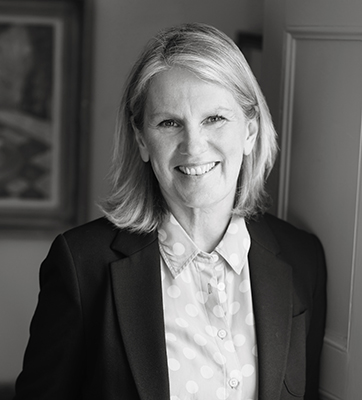
Tracey Camilleri
Not so much attention has been paid to the social side of wellbeing, loneliness and the importance of friendship at work, not just for the sake of mental health, but also for the sake of productivity, performance, innovation and impact.
As so much time is spent hybrid-working, when people do actually come together, in person, it needs to matter and that requires care, design, and forethought. So that’s why we’ve been thinking and working with leaders to design social strategies for their organizations. It seems like there’s a sentiment that people in hybrid situations might feel like they are more productive, but there’s less social engagement — is that true, and how much of a tradeoff is that? They may complete more tasks, spend less time commuting, etc. The problem is, however, that you’re in danger of mortgaging the future. If things go badly or you need to innovate, to grow and expand, you find you don’t have the bank of social capital and trust that you need to draw on. You also may be creating a future retention and belonging issue because people need to come together in person. We are relational creatures. So it depends, if you’re just head-down, getting through the tasks, and possibly working from home is more productive. But how do you think coherently together? How do you learn from each other? How do you build trust? Make friends? Younger workers, Gen Z, are changing jobs more frequently — how does that relate to the social side of things — is there less of a feeling of social connection? Are there generational differences? We’re doing some research on Gen Z – the ones who’ve just transitioned into work. I personally think there is some psychological re-contracting that needs to be done between employers and that generation. They were hit particularly hard socially and educationally by COVID-19 and now the nature of work is being renegotiated on their watch. How do they build groups of work friends, or get the incidental learning that comes simply from sitting next to someone more experienced? On the other side, I spoke to a group of entrepreneurs recently and I got a bit of pushback from them, saying, actually we’re finding it really hard to motivate our youngest employees, they are kind of “quiet quitting,” they’re out there somewhere behind the screen, but we don’t quite know what they’re doing. I was quite surprised. There’s something that needs to be faced together about the experience this generation has had. I’m interested to learn from organizations who are being inventive here. This is a generation that also expects more, and quite rightly. Certainly in the UK, they are not getting more at the moment. Tracey Camilleri is an Associate Fellow at Oxford University’s Saïd Business School, former Director of the Oxford Strategic Leadership Programme, and co-founder of leadership and organizational development consultancy, Thompson Harrison. She is the co-author of “The Social Brain: The Psychology of Successful Groups.”
Frequently Asked Questions
What do you mean by the “social brain,” and why is it so important for my business? Think of the social brain as our mind’s ancient operating system, wired over millennia for connection, trust, and belonging within a group. Modern work environments often try to run incompatible software on this system, leading to friction like disengagement and burnout. For a business, understanding this is crucial because high-performing teams, innovation, and genuine collaboration all run on this deep-seated need for social connection. When you design your organization to work with our social brain, not against it, you create the conditions for people to do their best work.
My team is hybrid. Are you saying we need to come back to the office full-time to be effective? Not at all. This isn’t about mandating a location, but about being intentional with the time you have. The key is to stop treating in-person time as a default and start designing it with purpose. If your team comes together, it should be for activities that build the social bonds technology can’t replicate—deep collaborative sessions, shared experiences, and unstructured conversations. A hybrid model fails when it just moves siloed work from a home office to a corporate one. It succeeds when it uses in-person time to build the relational wealth that fuels performance everywhere else.
What is the single biggest mistake leaders make when structuring their teams? The most common mistake is ignoring the natural limits of group dynamics. Leaders often create a single, large team and expect it to be agile, creative, and decisive all at once, which is neurologically impossible. A small team of five is built for speed and flow, while a group of fifteen is better for complex decision-making that requires diverse viewpoints. The error is treating a team as a name on an org chart instead of a living social unit with specific cognitive capacities based on its size.
How can I build “social capital” if my team rarely meets in person? Building social capital remotely requires a deliberate strategy beyond virtual happy hours. It means engineering moments for genuine, non-transactional interaction. This could look like starting meetings with personal check-ins that aren’t about work, creating dedicated channels for shared interests, or structuring projects to require deep one-on-one collaboration between different team members. The goal is to build a bank of trust and mutual understanding, so when you face a challenge or need to innovate, you have a strong relational foundation to draw upon.
Why is Gen Z having a harder time, and what can leaders do about it? Many members of Gen Z entered the workforce during a period of extreme disruption, missing out on the crucial in-person mentorship and social learning that happens by osmosis in an office. They are essentially navigating a new world of work that is being renegotiated in real-time. Leaders can help by creating more structured support systems. This means implementing formal mentorship programs, facilitating connections across the organization, and being incredibly explicit about culture and expectations rather than assuming they will be absorbed naturally.
Key Takeaways
- Rethink Team Size for Peak Performance: Our brains are wired for specific group dynamics. Use small teams of five for agility and crisis response, groups of 12-15 for effective decision-making, and recognize that beyond 150 people, symbolic leadership replaces genuine connection.
- Build Social Capital Before You Need It: While hybrid models can feel productive for individual tasks, they risk draining the trust and shared understanding required for future innovation and resilience. Leaders must create a deliberate social strategy that makes in-person time count for connection, not just collaboration.
- Lead by Facilitating, Not Directing: The essential skills for modern leaders have shifted from public speaking to active listening and mediation. The new mandate is to convene the right people and facilitate conversations that unlock the collective intelligence of the group.