
Artificial intelligence transforms user experience and customer experience by enabling hyper-personalization, adaptive interfaces, and systems that act on behalf of customers rather than waiting for instructions. In 2026, the shift from static design to intelligent, context-aware experiences is no longer theoretical-it is operational. This article examines how AI changes the craft of ux design and the operating model behind it, what it means for customer trust and brand identity, and how leaders can build a practice ready for what comes next. Written from Vivaldi’s perspective, it reflects our view that interaction design is growth design and that intelligent interaction fields are where competitive advantage compounds.
Key Takeaways
- AI shifts UX and CX from fixed funnels to adaptive, personalized, and increasingly agentic experiences. AI enables interfaces that adapt to individual users in real time, replacing one-size-fits-all flows with systems that sense context, predict intent, and act.
- The craft changes (how teams research, design ai interactions, test prototypes, and ship) and so does the operating model (roles, data infrastructure, governance). But ai technology augments-rather than replaces-human expertise, human creativity, and strategic judgment.
- When grounded in real customer data and embedded inside intelligent interaction fields, ai powered ux drives measurable outcomes: increasing customer satisfaction, lowering service costs, building stronger loyalty, and accelerating growth. AI improves customer satisfaction scores by 93% in some cases.
- Designing with non-deterministic generative ai requires new practices: probabilistic user journeys, guardrails for brand consistency and safety, and transparent data handling that protects customer trust.
- The organizations leading in 2026 treat AI as a design material woven into every interaction that matters-not a bolt-on experiment.

From Fixed Flows to Adaptive, AI-Driven Experiences
For over a decade, ux professionals built experiences as deterministic sequences-onboarding wizards, checkout funnels, scripted support paths. These flows served their purpose, but they assumed every user in a segment would follow the same route. AI shifts design from one-size-fits-all to dynamic, predictive models that respond to each customer’s context, behavior, and intent in real time.
What we now call ai ux design is the practice of using machine learning, generative ai, and agentic ai systems to personalize interfaces, content, and next-best actions across the entire customer journey. AI predicts user behavior by analyzing historical data patterns, while recommender systems and behavioral prediction models sit inside products and service portals to adapt screens, copy, and flows based on live signals. AI dynamically alters interfaces based on historical user behavior, and ai tools help create tailored user interfaces for better engagement.
Vivaldi’s core argument is that the most powerful growth levers now live in smarter interaction moments-not in campaigns or static features. The difference between traditional automation (predefined rules, branching scripts) and ai driven experiences is fundamental: the latter infer intent from messy, ambiguous inputs, learn continuously, and adjust without designers specifying every branch. This is not incremental improvement. It is a structural change in how experiences are conceived, built, and evolved.
Why AI Matters for Customer Experience, Satisfaction, and Loyalty
CX and product leaders in 2026 evaluate ai powered tools against the metrics that define their mandates: higher customer satisfaction (CSAT/NPS), better first-contact resolution, lower cost-to-serve, and deeper customer loyalty. AI can analyze customer behavior to anticipate customer needs across every stage-discovery, purchase, onboarding, usage, service, and renewal-providing always on support that was previously impossible to deliver at scale.
Across the customer journey, AI enhances customer interactions at each touchpoint. Tools track user interactions in real time to pinpoint friction points. AI can deflect up to 8,000 support tickets for businesses, and it helps businesses manage higher support volumes at scale without sacrificing quality. AI can handle common requests, reducing operational strain and freeing support teams for complex tasks that require human empathy.
The data supports the investment. A global beauty retailer using AI-powered personalization improved revenue by 47% and doubled average order value. Eighty percent of CX leaders say memory-rich AI builds lasting customer relationships, because systems that remember prior interactions reduce customer effort and demonstrate attentiveness. This is customer experience ai in practice: not a chatbot stapled onto a help center, but intelligence distributed across the entire customer journey.
Still, AI must be evaluated like any CX investment-through clear KPIs tied to revenue growth, retention, cost-to-serve, and resolution quality, not model accuracy alone. AI improves efficiency by automating routine tasks, but the real question is whether it drives outcomes customers actually feel.
Designing with Non-Deterministic AI: A New UX Craft
Generative ai and probabilistic models produce different outputs even from identical inputs. This fundamentally breaks the classic ux design assumption of fixed screens and deterministic flows. Every ux designer working with large language models or diffusion-based tools must now think statistically-designing bounds and behaviors rather than specifying every ui design state.
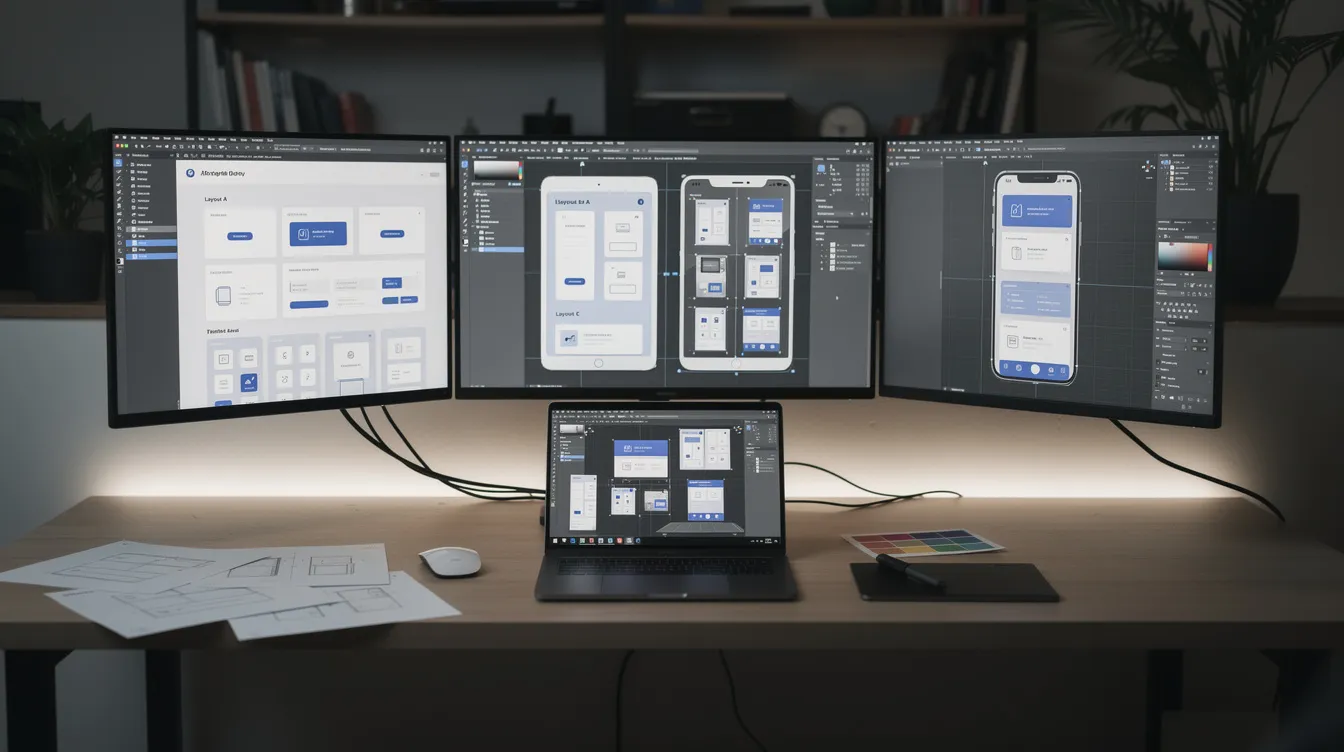
In 2026, the design process looks different. AI enables rapid transformation of wireframes into interactive prototypes and functional prototypes. AI tools help designers explore a broader range of layout variations and design variations, while generative ai is used to create research plans and synthesize data. Designers use AI to simulate human behaviors for usability testing, and ai powered tools provide immediate feedback during user testing. Automated user testing speeds up feedback analysis in ux design, letting teams iterate in hours rather than weeks.
Practical patterns for embedding AI inside products include:
- Inline suggestions: autofill, intelligent defaults, contextual recommendations
- Copilots: helper agents within products that surface insights and suggest improvements
- Background automation: summarizing customer history, pre-populating forms, resolving known issues silently
- Proactive notifications: behavior-driven alerts triggered by thresholds or detected sentiment
AI analyzes customer feedback to interpret emotions through sentiment analysis, enabling systems to respond to emotional context rather than keywords alone. AI automates the planning and analysis phases of research, and ai tools automatically scan interfaces for compliance with accessibility standards.
New design artifacts are emerging: prompt libraries that standardize tone and intent, guardrail specifications that define what a model must never do, and response matrices mapping customer scenarios to safe ranges of AI behavior. These artifacts sit alongside traditional wireframes in ux workflows, reflecting a design process that governs behavior, not just layout.
Intelligent Interaction Fields: Embedding AI Where Growth Happens
An intelligent interaction field-Vivaldi’s term for an interaction-first architecture-senses context, reasons using your business logic, acts across channels, and learns from every outcome. It is not a single chatbot or a standalone feature. It is a connected field of touchpoints across marketing, product, and service that are all AI-aware and AI-responsive.
This architecture solves a critical problem. Many AI pilots fail because they are isolated-a prototype here, a proof-of-concept there. Intelligent interaction fields make intelligence visible inside real workflows where customers and employees already operate. CX leaders are investing accordingly: 29% of CX budget in 2026 is allocated to agentic AI and AI agents.
Concrete examples in 2026 include:
- An AI sales copilot that orchestrates outreach via email, in-product messaging, and triggered notifications-keeping messaging consistent and tailored across channels
- A support system that routes issues, proactively resolves known problems, and suggests fixes before the customer asks-eliminating disconnected systems
- Recommendation engines that adapt in real time to mood, mode, device, and location
Owning the interaction field creates a strategic moat. Companies can swap or combine underlying models while retaining proprietary learning and customer data. The moat is in the orchestration, not the model. This is how incorporating ai into the fabric of customer interactions compounds advantage over time.
Personalization at Scale: Using Customer Data Responsibly
AI-powered personalization tailors experiences-content, recommendations, pricing, and flows-based on real-time analysis of customer data across devices and channels. AI enhances personalization in ux design through data analysis, and AI helps deliver hyper-personalized interactions for every customer. Sixty-seven percent of consumers expect more personalized service from AI, a signal that expectations now outpace what most brands deliver.
The data foundations required are substantial: unified customer profiles, event streams, consent records, and clear data quality standards. AI’s effectiveness relies on unified customer data-without it, models operate on incomplete signals and produce mediocre results. AI can personalize marketing messages based on purchase history and other historical data, but only when that data is clean, consented, and unified.
Key personalization patterns include:
| Pattern | Description |
|---|---|
| Next-best-action engines | Predict what a customer needs next based on behavior and context |
| Adaptive onboarding | Adjust flows based on user proficiency or engagement level |
| Dynamic bundling | Customize offers based on segment or churn risk |
| AI-curated content feeds | Tailor articles, videos, or products per user in real time |
Privacy and trust remain non-negotiable. Regulations like GDPR and CCPA require transparent consent, plain language explanations of AI use, and easy controls for users to adjust personalization levels. Forrester predicts roughly one-third of brands will damage trust by deploying AI self-service prematurely. The business tension is real: deeper personalization lifts conversion by 10–25%, but over-personalization can feel invasive. Teams should test for comfort and perceived value, not just click-through rates.
Agentic Experiences: When AI Acts, Not Just Responds
Agentic experiences are ai systems that independently take actions on behalf of users-reordering items, rescheduling appointments, adjusting subscriptions-within defined guardrails. Unlike traditional chatbots limited to reactive Q&A, agentic AI understands goals, plans multi-step tasks, and executes through APIs while keeping the human in the loop.
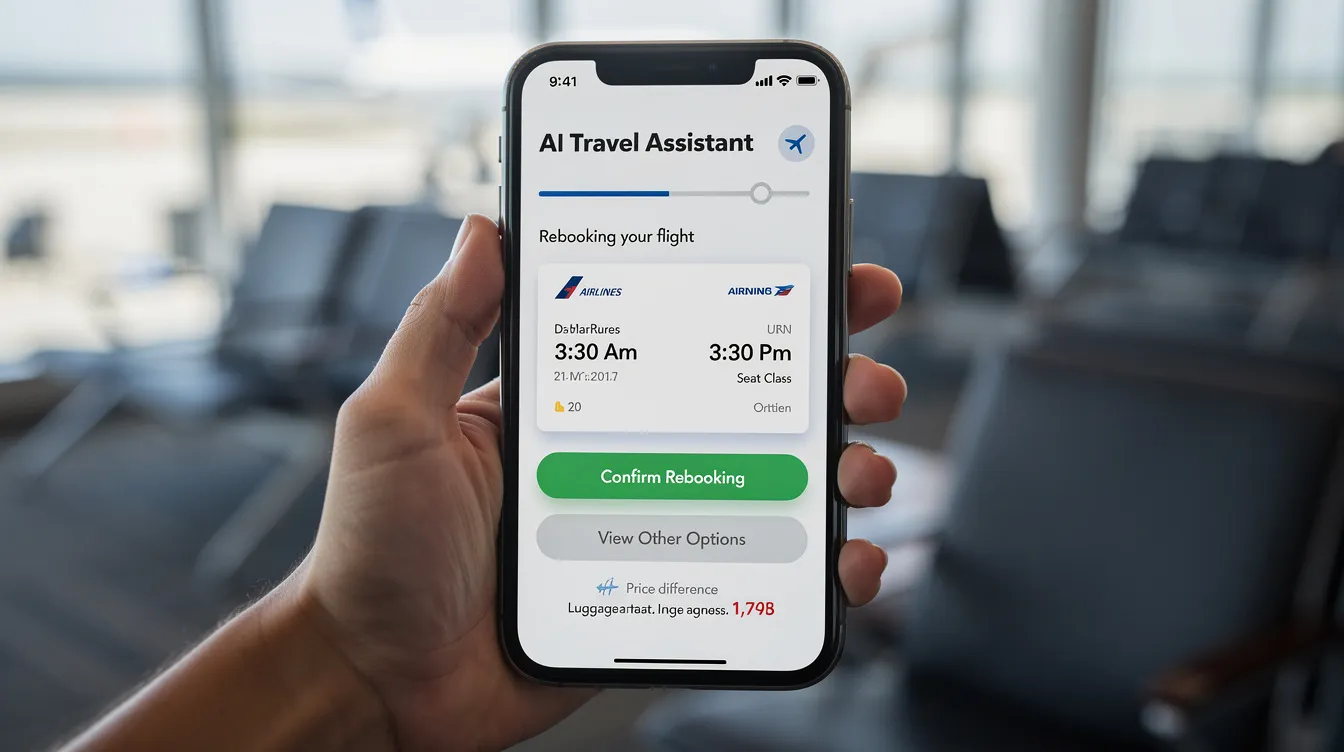
CX strategies now involve AI-powered chatbots that handle complex queries, but agentic systems go further. Consider a travel assistant that proactively rebooks flights and hotels when disruptions are detected, or a subscription service that adjusts renewal terms when churn risk is identified, then explains changes clearly. Virtual assistants operating in this mode function as advocates, not just answering machines.
AI can reduce response times by up to 64%, and AI reduces resolution time by 34% for customer inquiries. AI can handle common requests and reduce wait times, while ux designers focus on crafting natural, empathetic interactions in chatbots and agentic interfaces alike. The design challenges are significant: setting expectations about what AI will and won’t do, confirming actions before execution, handling failure modes gracefully, and providing easy override paths to human agents.
When designed well, agentic AI strengthens customer trust by demonstrating that the system has the customer’s back in critical moments. AI is also crucial for augmented reality applications in retail, and virtual reality experiences increasingly rely on agentic intelligence. As ai continues to mature, these experiences will extend across physical and digital contexts through new technologies.
Brand, Guardrails, and Customer Trust in AI-Driven UX
AI-driven UX must still feel like the brand. Tone, visual language, decision logic, and ethical standards must remain consistent even when responses are generated on the fly. Eighty percent of CX leaders say transparency in AI is essential, and the data confirms their instinct: AI can create a disconnect if over-automated, and AI can perpetuate biases if not carefully monitored.
Design teams translate brand strategy into guardrails: tone guides, forbidden topics or actions, escalation triggers when confidence is low, and rules for how AI may use or surface customer data. Without these, risks multiply-off-brand language, hallucinated answers, biased recommendations, or opaque decisions that erode service quality.
Governance practices that work in 2026 include:
- Cross-functional AI review councils with representation from CX, legal, and brand
- Red-teaming of high-stakes interactions before launch
- Logging and monitoring of AI outputs for drift and anomalies
- Clear incident-response protocols
Visible transparency-such as “why you’re seeing this” explanations, AI vs. human indicators, and easy complaint channels-improves perceived fairness and supports long-term customer loyalty. Without human touch in sensitive moments, even sophisticated ai driven solutions risk losing context and losing the human connection that defines great experiences.
How AI is Changing the UX and CX Operating Model
AI doesn’t just change individual touchpoints. It reshapes how UX, product, data, engineering, and operations teams work together. Firms that intentionally design human-AI interaction are approximately 2.5 times more likely to report better financial results than those that do not.
New roles are emerging: AI experience designers who define model behaviors, prompt architects, CX data strategists, and cross-functional squads focused on end-to-end user journeys rather than channel ownership. AI tools collapse traditional silos between research, design, copy, and development by automating repetitive tasks and enabling faster, integrated iteration. UX teams report a 30–50% productivity gain on production work using AI.
The key challenges remain organizational. Sixty-six percent of B2B CX leaders cite data access, quality, and management as the biggest obstacle to scaling CX with AI. Leaders must invest in AI literacy-understanding model capabilities, limitations, and bias-while reinforcing human strengths: problem framing, ethics, storytelling, and the human empathy that no model replicates. Integrating ai at the operating-model level means continuous experimentation: always-on A/B tests, journey-level metrics, and AI-specific KPIs such as deflection with satisfaction, agent assist uptake, and personalization lift. AI delivers ai powered insights and operational efficiency, but only when measurement systems are rigorous enough to surface insights that drive decisions.
Building an AI-Ready UX and CX Design Practice
Building an AI-ready design practice is a staged journey: align on outcomes, modernize data and platforms, redesign journeys, then scale through governance and playbooks. Start with a few high-impact journeys-support, onboarding, renewal-map current interactions, identify friction, and define where AI can remove effort or add valuable insights.
Integrate AI into existing ux workflows rather than creating parallel processes. Use AI for research synthesis, journey mapping acceleration, simulation of edge cases, and rapid exploration of interaction concepts. Designers can test prototypes faster, analyze user feedback at scale, and automate tasks that previously consumed weeks-all without sacrificing the human creativity and strategic thinking that differentiate good experiences from generic ones.
Cross-functional squads combining CX, product, engineering, data science, and operations-with shared accountability for both customer satisfaction and commercial impact-outperform siloed teams consistently. AI facilitates real-time subtitles and audio descriptions for accessibility, and AI identifies areas for improving accessibility in design, making inclusive experiences achievable at scale. AI improves accessibility in ux design through natural language processing, ensuring experiences work for every user.
Ready to turn AI strategy into operational reality? Explore Vivaldi’s AI-driven UX and CX design services to move from pilot to platform with a practice built for the demands of 2026 and beyond.