
For decades, marketing operated on a simple principle: push. Brands shouted their messages, hoping to be heard above the noise. That era is over. The modern marketplace operates on a different law of physics: pull. The strongest brands don’t shout; they exert a gravitational force, drawing people into their orbit through a deep connection to their mission, vision, and values. This powerful brand customers attraction isn’t magic. It is the result of a meticulously designed strategy that builds memory structures and emotional affinity. This is how you stop competing for attention and start commanding it through genuine connection.
The relationship brands have with their consumers is going through a revolution. A new consumer contract is being written and it’s not the brands who are leading the way. It’s their consumers. Social, cultural and technological trends have changed consumer behaviours and expectations beyond recognition. And the revolution is still ongoing. This is challenging companies in every aspect of their business and brand strategies. They need to be able to respond quickly with innovative approaches to customer experiences and marketing communications. If your brand and marketing communications still centre around pushing out messages to potential customers, you’re going to be left behind. In today’s marketplace, the ability to engage consumers and pull them into your sphere of influence is vital for any brand that wants to maximise growth. Those who understand how to create this irresistible force of attraction – or Gravitational Pull – between brand and consumer will succeed in the modern digital-first world. However, while some brands have undeniably got it, many others are struggling. In this article, we’ll share some valuable insights, uncovering the nature of Gravitational Pull, its impact on brands and how you can evolve your marketing communications in order to create it.
What Creates Irresistible Brand Attraction?
Gravitational Pull is created when a brand acts, communicates and creates experiences in ways that allow people to more deeply connect with its mission, vision and values. The theory draws on the concepts of attention, relevance and network effects to create a deep consumer affinity with the brand. Brands with gravitational pull deeply empathise with the reasons why a person has turned to them for a solution and understand how to create a connection on a deeper, emotional level. This results in a level of customer loyalty and advocacy with the brand that naturally pulls more and more people into its orbit. With powerful brands we often see consumers not only freely share their love for it with others but also defend the brand when it comes under scrutiny or receives criticism. Gravitational pull doesn’t just attract people to brands, it helps to retain them as customers. Customers will look to the brands that are most relevant in their lives for new solutions as the need arises. Brands that integrate well into people’s lives are harder to switch away from. This can be a result of compelling ease of use, or it can be the effect of different elements working together. Apple is a familiar example. Their products work well together. Once you have the phone, the laptop is worth considering. Once you have those an Apple Watch looks like a good purchase. And when it comes to replacing your phone? Well, it’s so much nicer when everything works together, isn’t it? Why suffer the inconvenience of switching to a different platform? This level of engagement may have been difficult to quantify in the past. However, the data-driven nature of digital communications means we can start to learn how to track these phenomena in real-time and even predict its impact on the bottom line.
The Psychology of Brand Attraction
At its core, brand attraction isn’t about clever taglines or flashy ads; it’s a deeply psychological phenomenon. It taps into fundamental human needs for identity, belonging, and self-expression. When a brand creates a gravitational pull, it has successfully moved beyond simply selling a product and has instead offered consumers a piece of an identity they want to adopt. This connection is what transforms a passive audience into an active, engaged community. Understanding the mechanics behind this attraction is the first step toward building a brand that doesn’t just compete for attention but commands it through genuine affinity and shared values.
Brand Personality and Self-Image
A brand’s personality is far more than a collection of traits defined in a strategy document; it’s a mirror reflecting a consumer’s ideal self. People are drawn to brands that align with how they see themselves or, more powerfully, how they aspire to be seen. When a brand projects a personality of rugged independence, it attracts those who value that trait. When it embodies sophisticated innovation, it pulls in those who see themselves as forward-thinking. This alignment creates a positive feedback loop: customers feel good about their choice, which deepens their trust and satisfaction, making the brand an integral part of their personal narrative.
Consumer-Brand Identification (CBI)
Consumer-Brand Identification, or CBI, is the pinnacle of brand attraction. This is the point where a customer feels such a strong connection that the brand becomes part of their personal identity. The brand’s story and their story become intertwined. It’s the difference between saying “I use that product” and “I am a [Brand Name] person.” This deep sense of belonging is what fuels unwavering loyalty. When customers strongly identify with a brand, their relationship transcends the transactional. They see the brand as an extension of themselves, creating a powerful bond that is incredibly difficult for competitors to break.
Defense Against Negative Information
One of the most powerful outcomes of strong CBI is the creation of a psychological shield. Customers who see a brand as part of their identity are inherently motivated to protect it. When confronted with negative information or criticism about the brand, they are far more likely to dismiss, question, or actively argue against it. An attack on the brand can feel like a personal slight. This creates a resilient community of advocates who act as a natural defense system, preserving the brand’s reputation and insulating it from the kind of reputational damage that can derail less-established competitors.
Distinguishing Brand Loyalty from Customer Loyalty
In the pursuit of growth, many leaders mistakenly use the terms “customer loyalty” and “brand loyalty” interchangeably. This is a critical error in strategic thinking. While both result in repeat purchases, their foundations are fundamentally different. One is built on the shifting sands of convenience and price, while the other is built on the bedrock of emotional connection and shared identity. Understanding this distinction is essential for any organization aiming to build a durable, high-growth brand. Focusing on the wrong type of loyalty can lead to strategies that produce fleeting results rather than long-term, sustainable value.
Customer Loyalty: A Transactional Relationship
Customer loyalty is fundamentally a relationship of convenience. It’s a rational, calculated decision driven by factors like price, discounts, rewards programs, or ease of access. A customer might be loyal to a specific grocery store because it’s on their way home from work or because its loyalty program saves them money. However, this bond is fragile and transactional. The moment a competitor offers a better price, a more generous rewards system, or a more convenient location, that loyalty evaporates. It’s a temporary arrangement, not a deep-seated commitment, leaving the business vulnerable to market shifts and competitive pressure.
Brand Loyalty: An Emotional Connection
Brand loyalty, in contrast, is an emotional conviction. It’s a customer’s deep-seated belief that a brand is superior, not just in its product quality but in its values, mission, and what it represents. Price becomes a secondary consideration because the customer is buying into an idea, a community, and an identity. This emotional connection fosters a powerful, resilient relationship. Brand-loyal customers become advocates who generate word-of-mouth marketing, defend the brand publicly, and remain steadfast even when faced with cheaper or more convenient alternatives. This is the kind of loyalty that transforms a business into an enduring cultural icon, and it’s the ultimate goal of a truly effective brand and innovation strategy.
The brand positioning strategy that underpins this emotional connection must be deliberate — rooted in a clear purpose, expressed consistently, and designed to resonate with the specific identity your audience wants to claim as their own.
How Brand Attraction Impacts Market Share
For Les Binet, one of the godfathers of marketing effectiveness, really smart marketers focus on building ‘memory structures’ that bias consumers’ behaviours into the future. This builds the brand long-term, creating a natural preference for it that can then be converted efficiently into revenues through smart activations. Binet recently unveiled the results of six years’ worth of research that has started to create some data-driven evidence pointing towards the effectiveness of creating gravitational pull. His work shows a connection between a brand’s share of organic search (arguably a proxy for an aspect of gravitational pull), and future market share. This reveals that the share of online search is a key indicator of brand power, both in the short and long term. Perhaps most interestingly this long-term prediction can also act as an early warning system for brands. An example of this is the appliance brand LG. LG’s share of search fell and, in turn, both search volume and then market share followed a downward trajectory. Binet’s research starts to reveal a key financial correlation between having an effective gravitational pull and market share. However, it doesn’t explain how to create the phenomenon.
How to Create Your Brand’s Gravitational Pull
So, how can you create the conditions required to enable a deeper level of connection with consumers that will help you to evolve as a brand, stay relevant and navigate in a rapidly changing marketplace? There are three key principles underlying this.
Start with a Foundational Framework
Gravitational pull isn’t magic; it’s architecture. The brands that feel irresistible don’t just appear in the market—they are meticulously designed to fit into the lives of their customers. This starts with a foundational framework, a blueprint that rejects surface-level demographics for deep, contextual empathy. Brands with gravitational pull deeply empathize with the reasons a person has turned to them for a solution, understanding the context, the frustrations, and the aspirations that drive behavior. Before you can pull customers closer, you must map the world they live in. This framework isn’t about a single campaign or a clever message; it’s the strategic core for every interaction, ensuring your brand consistently resonates on a human level.
The 4 C’s of Branding: Company, Category, Consumer, and Culture
A robust framework is built upon four interconnected pillars: Company, Category, Consumer, and Culture. First, you need an unflinching understanding of your Company—your core purpose, values, and unique capabilities. Next, you must map the Category you operate in, identifying not just competitors but the established rules you can follow or break. The third pillar is the Consumer, which requires moving past static personas to understand their real-world activities, motivations, and pain points. Finally, you must analyze Culture—the trends, tensions, and conversations shaping your consumer’s reality. A strong brand that integrates these four elements helps your business stand out because it feels relevant and intuitive. After all, brands that integrate well into people’s lives are harder to switch away from.
The Core Components of a Brand Strategy
With the 4 C’s as your strategic inputs, you can construct the core components of your brand strategy: purpose, positioning, and personality. Your brand purpose is your ‘why’—the fundamental reason you exist beyond profit. Your positioning defines how you uniquely solve a problem for a specific audience, creating a distinct space in their minds. Finally, your brand personality dictates your character, shaping how you communicate and interact. This strategic core is what transforms transactions into relationships. True customer loyalty is not just about repeat purchases; it’s about emotional connections. By defining these components, you create a consistent and authentic brand experience that demonstrates a deep understanding of what consumers want and how your business solves their problems.
1. Anchor Your Brand in a Clear Purpose
 The conditions for creating gravitational pull are rooted deep within the organisation and the brand’s reason for being. The core of the brand – its mission, vision and values – are what give it weight, creating the ability to draw people into its orbit. For this to happen, there needs to be absolute clarity in the brand’s DNA. If a brand has an unclear purpose, is relying on smoke and mirrors, or hasn’t truly developed these foundational aspects of its structure, consumers will sense the disconnect and won’t invite themselves in. There is perhaps no better example of gravitational pull being baked into the DNA than Nike. Nike’s brand mission states that ‘if you have a body, you are an athlete’ and this organising principle runs through all its activations. While the brand is associated with professional performance, it also bridges the gap to connect with culture. For many people, when you wear Nike you are associating with and saying something much deeper about your own values. When Nike hired Colin Kaepernick for their 30th anniversary ‘Just Do It’ campaign they upped the ante even further. Using Kaepernick, who took a knee during the national anthem before NFL games to protest police brutality, put what the brand believed in front and centre. The campaign ran with the strapline “Believe in something. Even if it means sacrificing everything.” Some hated the bold brand position and burned their trainers. However, many more loved it and became even more connected to the brand because of their shared values. The gamble also paid off commercially. Nike’s stock soared over the following year, seeing a five percent increase over the next twelve months.
2. Weave Your Brand Strategy into Every Interaction
If the brand is the interface of your business strategy, it needs to be fully represented in all your customer interactions. Creating a gravitational pull relies on a seamless connection between the brand and every interaction, experience and communication. All too often there are fractures in this process and it takes time to interpret and translate the brand strategy. Marketers can often get very tactical very quickly and do not align closely enough to the brand strategy. They need to consider their long-term marketing strategy to communicate the brand strategy. Each and every touch point matters and has the power to either build or erode the brand’s ability to create the pull. Take, for example, when the same social media post is shared across multiple channels without thinking about the appropriate activation and voice for that channel. People switch off or even worse think negatively about the brand and its ability to engage effectively with them.  Now look again at Apple. The queues around the block for each new release and the hyped-up audiences focused on their every announcement are no happy accidents. They are carefully planned and hard-earned. At the heart of Apple’s success is a relentless focus on creating consistency across the brand experience. As a result, they can sell more smartphones and at a higher margin than others in the sector. It’s purely because of the power of the brand. The emotional connection pulling you into the brand is baked into every touchpoint. When they advertise, the ads focus on showing the consumer the unique value proposition, as opposed to telling them about it. It is also realised through the in-store experience. The Genius bar makes you feel empowered and its radical reshaping of the in-store experience emphasises Apple’s disruptive spirit. And the brand journey continues when you get home with the premium unpackaging experience.
3. Get Closer to Your Customers
The greater the distance a magnet is away from its target, the less its ability to create attraction. So, getting closer to your consumers seems a no-brainer. In fact, many brands will say they do this already. However, relatively few understand how to build fluid organic relationships that pull customers in. Even more challenging is how to activate and empower consumers to be advocates who share the brand mission, vision and values more broadly. CMOs need to think more empathetically about their consumers. They need to understand their wants, needs, expectations and purchasing motivations in order to create better connections, interactions and experiences with consumers, not for them. By doing this and increasing the impact consumers can have on the brand, you stimulate powerful advocacy and pull consumers deep into the brand ecosystem. 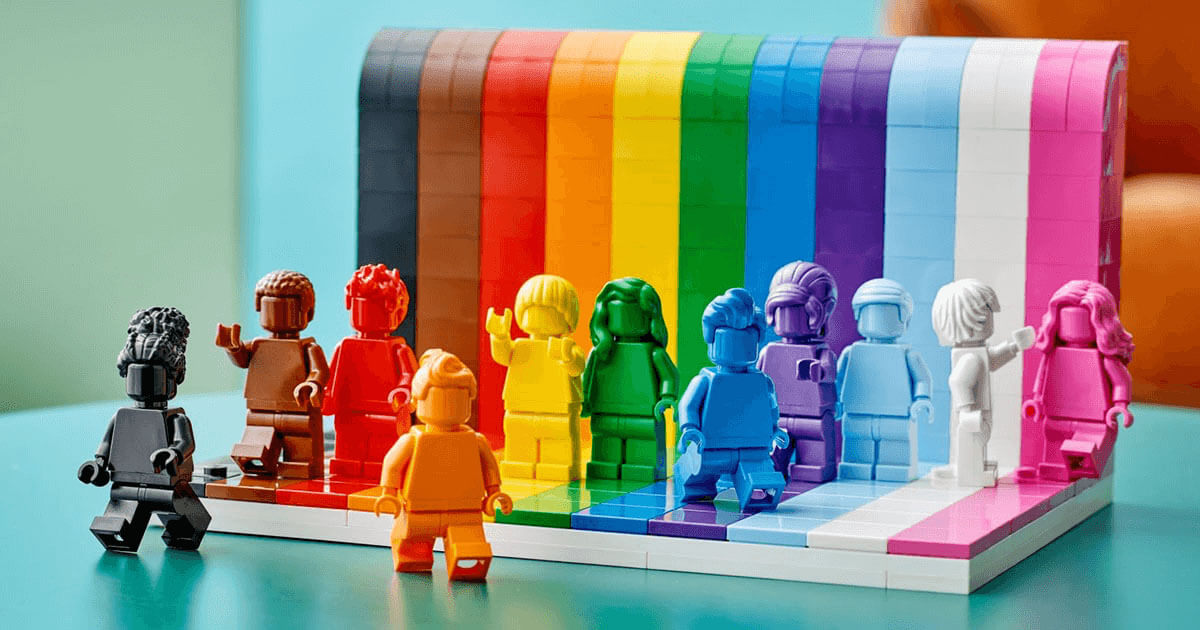 Take Lego, for example. This remarkable brand has topped the Superbrands ranking of the U.K.’s strongest consumer brands for the last two years. In such a fickle fast-moving industry this is an enormous feat. Their success is, in part, due to an organisational culture of customer-centricity. Their deep understanding of their consumers’ motivations means the brand does not frame itself as a toy company. Instead, their business is built around the concept of ‘free play’, opening up the opportunity to create interactions across a broader range of contexts, from gaming to theme parks and film franchises. The brand has adapted to the social age brilliantly, creating engaging content across all platforms. As one of the most digitally engaged brands in the world, it is the second most-watched brand channel on YouTube with a large proportion of the content created by participants. User-generated content extends their reach. The ‘Beyond the Brick’ fan YouTube channel, for example, was created by two teenagers and features the incredible Lego creations of builders from across the globe. The channel has grown to a worldwide phenomenon with over 530,000 subscribers and over 200 million views. Another source of Lego’s enormous gravitational pull comes from its Lego Ideas platform where users can submit, comment and vote on ideas for Lego products. By shortening the distance between the brand and its most valuable consumers, Lego not only created a continuous dialogue but gained a valuable source of amazing consumer insight. It is Lego’s ability to connect with its customers in diverse and meaningful ways that contribute to creating such ardent brand advocates. Lego’s customers are keen to join up, contribute and become fully enmeshed in the brand.
4. Implement Specific Attraction Strategies
With the foundational principles in place, creating gravitational pull requires translating them into specific, tangible actions. These strategies are not a checklist but a system of behaviors that, when executed consistently, build the memory structures and emotional connections that draw people in. They are the practical application of purpose, turning brand philosophy into customer experience. Each strategy works to reduce the distance between your brand and your audience, making your value proposition clearer, more trustworthy, and more engaging at every point of interaction.
Create a Unique Visual Identity
A brand’s visual system is its most immediate language. Before a customer reads a single word, they see your colors, your typography, and your imagery. This isn’t about decoration; it’s about creating cognitive ease and building memory. A unique and consistent visual identity acts as a shortcut to your brand’s meaning, instantly communicating your purpose and personality. As people remember what they see best, this visual coherence ensures your brand is recognizable across every platform, from a social media feed to a physical product. It’s the silent ambassador that builds familiarity and trust, making your brand feel like a constant and reliable presence in a chaotic world.
Focus on Customer Problems (Pain Points)
The most magnetic brands don’t sell products; they offer solutions to deeply felt problems. Gravitational pull is generated by empathy—the ability to articulate a customer’s challenge better than they can themselves. When you shift your focus from your features to their pain points, the entire dynamic changes from a sales pitch to a supportive partnership. Research shows that nearly 80% of people want to buy from brands that prove they understand their issues. This requires a deep dive into the customer’s world, moving beyond demographics to understand their motivations, frustrations, and aspirations, which is central to any effective brand and innovation strategy.
Build Trust with Reviews and Testimonials
In an environment of overwhelming choice, trust is the ultimate differentiator. Today, that trust is built not through polished advertisements but through the authentic voices of other customers. Your brand’s story is co-authored by the people who experience it every day. By prominently featuring customer reviews, case studies, and user-generated content, you are not just marketing; you are providing social proof. This transparency signals confidence in your offering and shows that your brand promise is consistently delivered. It creates a powerful feedback loop where satisfied customers become your most credible advocates, pulling new people into your orbit with an authenticity that no corporate message can replicate.
Create Helpful Content
Brands that attract customers act more like publishers than advertisers. The goal is to provide value that exists independently of a transaction. By sharing useful blog posts, insightful videos, and practical guides, you position your brand as a generous expert and a trusted resource. This approach, as noted by Brabender Creative, builds authority and fosters a community around shared interests and challenges. When you consistently offer help without an immediate expectation of a sale, you embed your brand into the customer’s life. You become their go-to source for information, building a relationship grounded in utility and respect that naturally leads to commerce when the time is right.
Use Gamification
Engagement thrives on enjoyment. Gamification is the art of integrating game-like mechanics—such as points, badges, and challenges—into non-game contexts to make interactions more compelling. This isn’t about making your brand a game; it’s about tapping into fundamental human desires for achievement, competition, and reward. By turning participation into a more playful experience, you can encourage repeat behaviors and deepen the connection customers feel with your brand. It transforms mundane actions into rewarding moments, fostering a sense of progress and community that keeps people coming back, not because they have to, but because they want to.
Make Irresistible Offers
Ultimately, attraction must lead to action. An irresistible offer is one that removes friction and makes the decision to engage feel both easy and intelligent. This extends far beyond a simple discount. It’s a compelling articulation of value that might include a risk-free trial, a satisfaction guarantee, or a product bundle that solves a complete problem. The key is to frame the offer so that the perceived value vastly outweighs the cost, making a “yes” the most logical choice. This initial transaction, driven by a powerful offer, can serve as the entry point to a long-term, loyal relationship built on the positive first impression you created.
Mapping Your Path to Greater Brand Attraction
How can brands begin to build gravitational pull? All brands exist somewhere along a spectrum when it comes to how they engage with their customers and their understanding of creating gravitational pull. Their communication models range from the simple outbound communications of traditional push marketing and ladder up to the multichannel, participative brand communities of platform business models and interaction fields. It’s easy to admire the skill and dexterity of brands like Lego, but if you’re a CMO tasked with emulating their success it can feel overwhelming. However, there are ways to progress, gaining sophistication along your evolutionary journey, at a sustainable pace. To understand this, let’s look at each of the communication models in turn. Placing your own organisation’s evolution along this spectrum can show you how far you have come, and provide pointers for the next steps to take.
1. From Push Marketing to Personalization
 Outbound communicators are engaged in traditional push marketing strategies. These companies commonly have a one-way communication model and haven’t framed their offering in a social way. They share product or service messages with customers but offer limited opportunities for consumers to interact. This is probably a model of communications that most brands believe they need to move away from since it is often characterized as a simple and outdated broadcast model. Whilst this approach can no longer be the long-term option for any modern brand, there is still a role for direct outbound communications, and a sensible evolution for a legacy business attempting to modernise how its brand engages with people is to stop broadcasting and start personalising outbound communications using what you already know about your customers to build a better relationship. In this way, you build a strong foundation for more relevant approaches. To build up the brand and evolve the consumer relationship, it may be time to start thinking about a back-and-forth communication system for customers.
2. Stage Two: Opening a Two-Way Dialogue
 Adding a layer of interaction with customers allows for two-way dialogue. Two-way communication allows a company to start better understanding how their product or service solves a problem for their customer. A company needs to have some way to allow customers to speak back to enter two-way communication. This could involve cultivating a presence on social media to open up conversations with customers and providing mechanisms for customer feedback. There are two key challenges with implementing two-way dialogue well. The first is operational – you need to have the scale of organisation and operation to be able to field customer requests and solve issues for them. Your social media managers will need to have the skills and resources of customer support agents. The second has to do with delivering brand experience – the quality and tone of your interactions have to reinforce your brand.
3. Stage Three: Encouraging and Facilitating Sharing
 When a brand understands how and where customer interactions are happening they can actively support the sharing of information and ideas and become a facilitator within their category. In this mode of communication, the brand understands its role in the lives of its top consumers in order to add value to this core group. While this community and interaction are not owned by the brand, their participation is valued in a way that allows the brand to get closer to its customers. At this stage, it is beneficial for a brand to start thinking about social influence and creating the motivation for consumers to become brand advocates. This allows the brand to evolve once again in order to extend their reach in the ecosystem. Organisations that wish to operate at this level can move things along by actively providing opportunities and spaces for people to share. That can be by encouraging creative use of products and services and inviting people to showcase their own results, and by ensuring that sharing buttons, hashtags, events and channels are in place and well-publicized so that people can be confident that they will find the right audience. Actively engaging with professional influencers can play an important role in this kind of communications strategy.
4. Stage Four: Amplifying the Audience’s Voice
 Customers like to share their experiences. In order to benefit from these interactions, brands must understand where they are happening and actively participate. By supporting and encouraging customers to continue to connect and communicate, brands can start to build social currency at this level. Creating platforms for consumers to share their ideas, both with the brand and with like-minded individuals, creates loyalty and advocacy that starts to draw in more and more people. The Lego case study we mentioned earlier is a great example of how passionate consumer brand advocates can become part of the product development lifecycle. To get to this stage, your brand needs a strong marketing communication strategy. The focus must be on the ability to share not only within the brand’s nucleus but also externally, thereby creating a community. Having too narrow an information-sharing system at this stage will slow velocity and make it difficult to create that pull. Your brand must have clear framing, branding and definition to continue to hear and be the audience’s voice. After these factors have been solidified and are owned by the entire organization your brand can start moving into the interaction field.
5. Stage Five: Building a Participatory Brand Community
 The world is created through interactions. By connecting people, information and data we can create higher quality and more consistent interactions that build brand value past a simple product or service. In this final stage, your brand is creating an interaction field pulling in the nucleus, ecosystem and even other brands to assist in interactions and information sharing. Having other brands in the interaction field will help improve the ecosystem size and create velocity. Your brand needs to be at the core of, and a direct participant in (if not the owner of), the interaction field. A direct line of communication between the brand and the interaction field must exist where active and consistent participation encourages sharing, both internally and externally.
Key Consumer Behavior Trends to Watch
The forces shaping brand attraction are not abstract; they are rooted in tangible shifts in human behavior. Understanding these currents is the first step toward building a brand that doesn’t just compete for attention, but commands it. The old playbooks are obsolete because the players have changed the rules. Consumers are no longer passive recipients of brand messages; they are active curators of their own information streams. Here are the new realities every leader must confront to create gravitational pull in a marketplace defined by consumer choice and control.
The Reality of Ad Avoidance
The era of captive audiences is over. With research showing that 64% of people actively try to avoid ads, the strategy of interruption has become a strategy of alienation. Brands that continue to shout into the void will only be met with silence. The challenge is no longer about reach and frequency, but about relevance and resonance. This requires a fundamental shift in business strategy, moving from a model of broadcasting to one of creating valuable experiences that earn the right to a consumer’s time. The goal is to become the signal, not the noise, by offering content and interactions so compelling that people choose to engage.
The Growing Trust in Smaller Businesses
Scale and market dominance are no longer the primary currencies of trust. In fact, the opposite is often true. A significant 63% of consumers now trust small, local businesses more than large corporations. This isn’t an indictment of size, but a signal that consumers are craving authenticity, transparency, and a sense of human connection. For large enterprises, the lesson is not to feign smallness, but to infuse their operations with the principles that build this trust. It means fostering an organizational culture that prioritizes genuine community engagement over generic corporate messaging, proving that even at scale, a brand can have a soul.
Willingness to Pay More for Aligned Values
A transaction is no longer just a transaction; it is a statement of identity. Consumers are increasingly using their purchasing power to vote for the world they want to live in. With over 70% willing to pay more for products from brands that are environmentally or socially responsible, purpose has moved from the periphery to the core of the value proposition. This transforms brand purpose from a communications tactic into a critical driver of commercial performance. A clearly articulated and authentically executed purpose is what allows a brand to build deep emotional connections, command a premium, and create a moat of loyalty that competitors cannot easily cross. It’s the foundation of a modern brand and innovation strategy.
Making Brand Attraction Your Competitive Edge
In a challenging marketplace where everything is in flux, the need to connect with your consumers remains constant. However, as we’ve seen, how we connect and the relationships we create needs to evolve. The concept of gravitational pull gives us a way to design an overarching marketing strategy that creates deeper, more profitable connections with our customers. As American astronomer Andrea M Ghez puts it: “Gravity wins over all other known forces.” In order to succeed, organisations must make sure gravitational pull originates deep within the brand and is connected to all interactions. They also need to shorten the distance between the brand and its customers. This is what Vivaldi does and we’d love to have a conversation with you about it. Contact us.
Brand Positioning Examples That Demonstrate Gravitational Pull
The principles of gravitational pull are most clearly visible when you study brands that have mastered their positioning. Purpose-driven clarity, consistent experience, and deep consumer empathy are not abstract ideals — they show up in the way iconic brands occupy a distinct and defensible space in people’s lives.
Nike’s “if you have a body, you are an athlete” is a famous brand positioning example precisely because it does not describe a product — it defines a worldview that millions of people want to belong to. Apple’s positioning around simplicity and creative empowerment has built one of the most financially valuable brand awareness strategies in history, turning every product launch into a cultural event.
What these brands share is the same foundation: a brand building strategy that works from the inside out — starting with an uncompromising sense of purpose and translating it into every touchpoint until the gap between brand and consumer effectively disappears.
Frequently Asked Questions
How is “gravitational pull” different from what we’ve always called brand loyalty? Think of it this way: brand loyalty is the outcome, while gravitational pull is the system that creates it. Traditional loyalty can sometimes be passive—a customer might stick with you out of habit. Gravitational pull is an active, dynamic force. It’s what happens when your brand’s purpose is so clear and compelling that it not only keeps your current customers close but also naturally attracts new people into your orbit through community and shared values. It’s the difference between having repeat buyers and having a thriving ecosystem.
This sounds great for new, disruptive companies. Can a large, established corporation really create this kind of pull? Absolutely. While it might seem like a game for nimble startups, large organizations have a distinct advantage: resources and reach. The key isn’t to pretend you’re a small, niche brand. Instead, it’s about using your scale to deliver your brand’s purpose with unwavering consistency across every single touchpoint. Look at Apple—their gravitational pull comes from a meticulously integrated experience, from their product design to their retail stores. For a large company, the challenge is aligning every department to project the same core identity and values.
What’s the most critical first step my team can take to start building brand attraction? Before you launch a new campaign or content strategy, you have to go deeper. The most critical first step is achieving absolute, organization-wide clarity on your brand’s purpose. This isn’t just a tagline; it’s the fundamental reason your company exists beyond making a profit. This purpose becomes the strategic filter for every decision you make. When your ‘why’ is clear, authentic, and consistently expressed, it acts as the center of gravity that begins to pull people in.
How can we measure the ROI of something that seems so emotional and intangible? While the connection is emotional, its impact is measurable. The post mentions Les Binet’s research linking a brand’s “share of search” directly to future market share, which is a powerful leading indicator. Beyond that, you can track metrics that signal a strong pull, such as the volume of user-generated content, community engagement rates, and brand-advocacy scores. These aren’t vanity metrics; they are tangible indicators of a resilient brand that can command a price premium and reduce reliance on paid advertising.
My company is in the B2B space. Does this concept of emotional connection still apply? Yes, because business decisions are still made by people who are driven by emotion, trust, and a desire for belonging. In a B2B context, gravitational pull is built on becoming an indispensable partner and a trusted authority in your field. It’s created by consistently providing valuable insights, solving your clients’ core problems, and fostering a community of professionals who rely on your expertise. The emotional connection here is grounded in trust, confidence, and the feeling of being part of an exclusive group of industry leaders.
Key Takeaways
- Stop Competing for Attention and Start Commanding It: The strongest brands operate on a “pull” model, creating a gravitational force through a clear purpose and shared values. This shifts the dynamic from interrupting customers to attracting them into your brand’s ecosystem.
- Build Brand Loyalty, Not Just Customer Loyalty: Transactional loyalty is fragile and based on convenience. True brand loyalty is an emotional connection where customers see the brand as part of their identity, making them powerful advocates who defend and champion your business.
- Design Your Brand’s Pull from the Inside Out: Brand attraction isn’t accidental; it’s architected. It begins with a foundational framework and requires weaving your brand’s purpose into every single interaction, systematically closing the gap between your business and your audience.
Related Articles
- Reinventing Brand Strategy: The Holistic Brand Model – Vivaldi Group
- How You Can Create More Gravitational Pull for Your Brand
- Top of Mind Awareness Strategies | Vivaldi
- Customers & Communities First: The New Drivers of Marketing with Dartmouth College’s Kevin Lane Keller – Vivaldi Group
- Interaction Fields: Redefining Customer Engagement | VIVALDI